
5 Ways Students Teach Peers About E-Waste
E-waste is a growing issue worldwide, with millions of tons of discarded electronics polluting the environment each year. Students are stepping up to address this problem by educating their peers and promoting responsible electronic recycling. Here's how they're making an impact:
- Student-Led Awareness Campaigns: Clubs like GECKO in Nevada organize creative initiatives, such as decorated collection bins and school-wide drives, to encourage recycling.
- E-Waste Collection Drives: High school programs like Recirqt in California collect and repurpose old devices, helping reduce waste while supporting students in need.
- Classroom Presentations: Hands-on workshops, like those at Lincoln Middle School, teach students about recycling and the valuable materials inside electronics.
- Social Media Advocacy: Platforms like TikTok and Instagram are being used to share e-waste facts and repair tips, reaching larger audiences.
- Sustainability Clubs: These groups track data, run dismantling labs, and partner with certified recyclers to ensure proper disposal and material recovery.
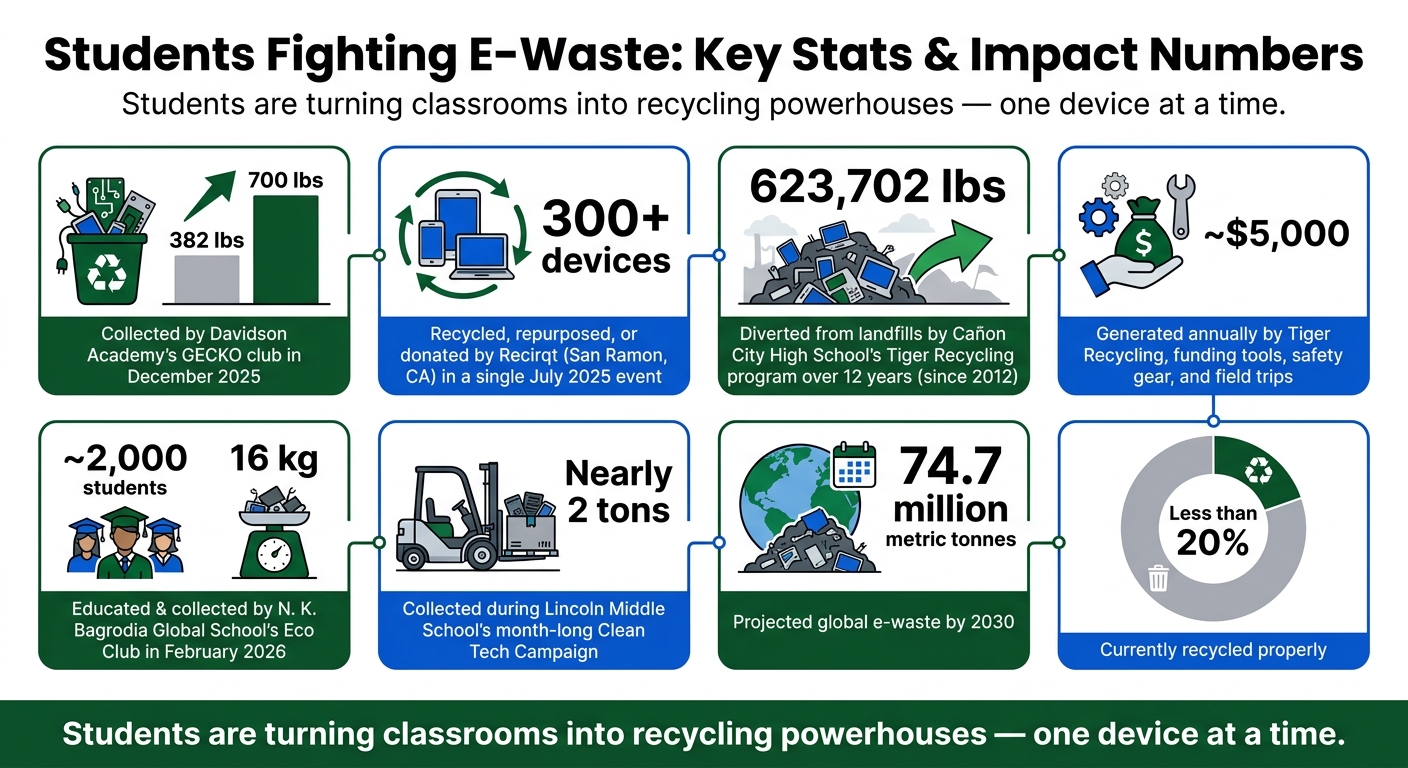
Students Fighting E-Waste: Key Stats & Impact Numbers
Recycling to Stop E-waste | Kady McKenna | TEDxYouth@ElliotStreet

sbb-itb-855056e
1. Student-Led Awareness Campaigns
When students take charge of e-waste education, it feels more like a friendly chat than a formal lecture.
Take Davidson Academy in Reno, Nevada, as an example. Back in December 2025, the student-run GECKO (Green Earth Community Knowledge Organization) club, led by President Alexander Weaver and Vice President Jordan Chong, spearheaded an e-waste recycling campaign. They placed collection bins around the school and encouraged their peers to recycle old electronics. The result? Nearly 700 pounds of e-waste - everything from laptops to phones - was collected, a big jump from the 382 pounds gathered the previous year. Redwood Materials later processed the waste, recovering valuable materials like lithium and copper.
"Our GECKO... E-waste Drive is an initiative to collect electronic waste from students at our school... and to bring it to a local recycler that it can be recycled and the elements inside can be reused for new batteries." - Jordan Chong, Vice President, GECKO club
The campaign's success was driven by the power of peer influence. Creative ideas like decorating bins as "Tech Monsters", sharing QR codes, and making announcements over the PA system helped keep the momentum going. But these efforts go beyond just raising environmental awareness. Students also gain practical experience in areas like project management, marketing, and logistics. Pete Mikulin, CEO of 3R Technology Solutions, highlighted this when discussing a similar student program: "That program, if you look at it as a whole, these kids learn a lot of skills. They take ownership in it every year. They don't look at it as just a class, they look at it as a company."
This hands-on approach not only tackles e-waste but also inspires other student-led initiatives to take shape.
2. Peer-Organized E-Waste Collection Drives
When students take the lead in organizing e-waste collection drives, participation often surpasses that of adult-led efforts. A standout example of this is Recirqt, a nonprofit run by high school students in San Ramon, California.
In July 2025, Recirqt joined forces with Surplus Service and the Fremont Education Foundation to host a collection event. Their efforts resulted in over 300 devices being recycled, repurposed, or donated to students in need.
"Our mission is personal. We are students and understand firsthand the critical role that technology plays in education and career opportunities." - Amar Puranik, Spokesperson, Recirqt
Another success story comes from the Tiger Recycling program at Cañon City High School in Colorado. Since 2012, a team of 20 students per quarter, guided by coordinator Ken Cline, has been dismantling electronics, sorting materials like aluminum and steel, and handling shipping logistics. Over 12 years, the program has diverted a staggering 623,702 pounds of e-waste from landfills. On top of that, the program generates about $5,000 annually, which covers tools, safety gear, and even field trips.
To ensure these drives are effective and environmentally responsible, partnering with a certified e-waste recycler is essential. For example, Bay Area schools benefit from Rica Recycling, which provides safe processing, collection bins, and secure data destruction services.
These events also inspire creativity. Students involved in such drives often find innovative ways to repurpose old components. EcoCircuits in Mumbai, for instance, transforms e-waste into IoT air quality sensors. Even simpler initiatives, like "Tech Autopsy" days - where students safely explore the inner workings of outdated devices - help change the way their peers view discarded electronics.
3. Classroom Presentations and Workshops
Students can make a big impact on e-waste awareness simply by presenting in their classrooms. These sessions are low-cost and straightforward, often requiring just a motivated student with a passion for sharing what they've learned. This method works well alongside other peer-driven efforts, offering a chance to deepen knowledge and inspire active participation.
What makes these sessions stand out is their interactive nature. Instead of sticking to slides, students can lead hands-on activities like disassembling devices. This approach sparks curiosity and brings the issue to life. Take Lincoln Middle School in Boston as an example. During their month-long "Clean Tech Campaign", they hosted poster contests, student-made explainer videos, and even a family-night teardown event with a local recycler. The result? Nearly two tons of e-waste collected. One ninth-grader shared their newfound perspective:
"I didn't know there was gold inside a phone. Now I don't want to throw anything away." - Ninth-grade student, Lincoln Middle School
For those looking to replicate such workshops, resources like pre-made slides, safety tips, and teardown guides from platforms like iFixit make preparation much easier. Kicking off with a relatable question like, "When was the last time you got a new phone?" can immediately grab attention and set the tone for an engaging session.
These classroom initiatives not only educate but also build essential skills like critical thinking, public speaking, and project management. With America's e-waste problem contributing to a global total expected to hit 74.7 million metric tonnes by 2030 and less than 20% currently recycled properly, there’s no shortage of opportunities to inform and inspire.
In the U.S., educators can take it a step further by collaborating with certified recyclers like Rica Recycling to ensure that dismantled devices are disposed of safely and responsibly.
4. Digital Peer Education Through Social Media and Online Tools
In the battle against the problems of electronic waste, digital platforms bring a fresh dimension to peer education. Social media, in particular, offers students the chance to reach audiences far beyond the traditional classroom. A well-crafted TikTok video or Instagram reel can grab the attention of hundreds, even thousands, of peers without requiring extra resources. This method taps into the power of peer influence - students are often more receptive to messages from their classmates than from teachers or administrators. By blending traditional educational efforts with digital tools, students can amplify their impact significantly.
Take, for instance, a 15-year-old student from Brazil named Lucas. He started an Instagram account, @CircuitoVivo, where he posted videos showing the inner workings of old gadgets. These teardown videos gained a large following and eventually inspired in-person events called "Tech Rescue Days", where participants could swap parts and learn repair skills. The success of this initiative stemmed from its visual appeal, which turned e-waste from just another school project into something that captured community interest.
Formats like short videos, infographics, and live Q&A sessions are especially effective for this type of advocacy. Campaigns using hashtags like #MySchoolEcycles allow students to track their collective progress, while initiatives such as "7 Days, 7 Facts" - which shares one e-waste statistic each day - are simple to execute yet highly visible.
"Storytelling and visual content make complex issues relatable and shareable, helping spread awareness beyond the classroom." - SAS Foundation
But these digital efforts go beyond raising awareness. They also help students develop practical skills like video editing, graphic design, content planning, and project management - all while contributing to an important environmental cause. This combination of advocacy and skill-building makes digital peer education a powerful tool. These initiatives seamlessly tie into broader student-driven efforts to tackle e-waste in meaningful ways.
5. Sustainability Clubs and Data-Driven E-Waste Projects
Sustainability clubs in schools are stepping up their game by using data to make their efforts more impactful. Instead of just promoting awareness, these groups focus on measurable outcomes - tracking the weight and types of devices collected, researching the lifecycle of electronics, and presenting solid numbers to their peers. This approach not only strengthens their environmental message but also gives students a hands-on way to see the results of their work. Plus, it naturally ties into practical labs that build technical and analytical skills.
The results speak for themselves. For instance, Davidson Academy's GECKO club has shown how consistent data tracking and partnerships with certified organizations can boost a program's impact year after year. Similarly, the Eco Club at N. K. Bagrodia Global School ran a campaign in February 2026 that educated about 2,000 students and collected 16 kilograms of e-waste, including batteries and cables, which were sent to Attero for proper recycling.
Some clubs take it a step further by running "Tech Autopsy" labs, where students safely dismantle devices to identify hazards and recover valuable materials like lead, mercury, gold, and copper. For example, students at the University of West Attica used a standardized Semiconductor Measurement Guide during their disassembly projects, classifying functional components for reuse in prototypes. These labs not only teach technical skills but also encourage creativity and critical thinking.
What keeps these clubs running smoothly over time is their structured approach. Assigning specific roles - like Data Manager, Research Lead, and Logistics Coordinator - ensures projects continue even as members graduate. Mentorship also plays a big role, with experienced members passing their knowledge to newer ones. A great example is Cañon City High School's Tiger Recycling program. Operating as a state-certified, student-run business since 2012, it has maintained its success through clear role assignments and long-term planning.
"That program, if you look at it as a whole, these kids learn a lot of skills. They take ownership in it every year. They don't look at it as just a class, they look at it as a company." - Pete Mikulin, CEO of 3R Technology Solutions
These projects help students build a wide range of skills:
| Skill Category | What Students Learn |
|---|---|
| Technical | Dismantling hardware, identifying hazardous materials, basic circuit analysis |
| Research | Mapping product lifecycles, analyzing data, auditing environmental impact |
| Project Management | Delegating tasks, tracking outcomes, planning logistics |
| Business/Admin | Managing inventory, ensuring regulatory compliance, marketing initiatives |
Partnering with certified recyclers, like Rica Recycling, adds another layer of responsibility to these efforts. For schools in California, Rica Recycling offers convenient pickup and drop-off services, along with secure data destruction. This ensures that the devices collected by student clubs are recycled responsibly and kept out of landfills, reinforcing the clubs' commitment to environmental stewardship.
Conclusion
These five student-driven strategies go beyond simply reusing or recycling old devices - they give students the tools to take charge of e-waste management. By doing so, students move from being passive observers to active participants who grasp the importance of disposing of electronic waste responsibly.
What makes these peer-led initiatives so impactful is their long-term influence. At such a formative stage in life, students are more likely to adopt environmentally conscious habits and bring them into their homes and communities. As environmental scientist Saidia Ali explains:
"It is about providing the know-how that will help them challenge our throw-away culture and empowering them to become responsible consumers."
To keep this momentum going, schools need to actively support these efforts. This can include backing sustainability clubs, weaving e-waste education into core curricula, and ensuring that recycling facilities are both visible and easy to use. Collaborating with a certified recycler is another practical step schools can take. For instance, in the San Francisco Bay Area, Rica Recycling provides services like convenient pickups, secure data destruction with certification, and IT asset recovery programs that can even offer buyback credits for outdated Chromebooks and tablets. These actions help prepare students to advocate for sustainability beyond their school years.
FAQs
How can a school start an e-waste drive safely?
To kick off a safe e-waste drive, begin by securing administrative approval and assembling a team to manage logistics. Collaborate with a certified recycler, such as Rica Recycling, to ensure proper disposal and secure data destruction.
Safety is key: use gloves, sturdy labeled containers, and steer clear of hazardous items like leaking batteries. Establish clear drop-off procedures and ensure all electronics are securely stored until your recycling partner arrives for pickup.
What electronics can students collect for recycling?
Students have the opportunity to gather a wide range of electronics for recycling. This includes devices like laptops, tablets, desktops, and servers, as well as common classroom or office equipment such as monitors, printers, and projectors. Additional items could be networking equipment, phones, scientific calculators, scanners, audio/visual systems, and accessories like keyboards, mice, and cables. Essentially, if it plugs in, runs on a battery, or contains a circuit board, it can be responsibly recycled through Rica Recycling.
How do schools protect personal data on donated devices?
Schools take steps to protect personal data on donated devices by working with professional IT asset disposition services, such as Rica Recycling. These services adhere to NIST 800-88 standards, ensuring storage media is either securely wiped or physically destroyed. Additionally, schools receive a Certificate of Data Destruction, which guarantees that all sensitive information, including student records and personal identifiable information (PII), is completely eliminated before the devices are recycled or reused.