
7 Tips for IT Asset Recovery ROI
For businesses, outdated IT equipment isn't just waste - it’s an opportunity to recover significant value. Here are 7 actionable tips to maximize your IT asset recovery ROI:
- Maintain a Complete Asset Inventory: Track all hardware details like age, condition, and location to avoid losses and improve recovery rates.
- Speed Up Processing: Delays in decommissioning can reduce asset value by 40-60%. Act quickly to preserve resale potential.
- Time Sales Strategically: Sell within 36-48 months to capture peak market value before depreciation accelerates.
- Use Secure Data Destruction: Choose methods like software wiping to protect data while retaining device resale value.
- Recover High-Value Components: Salvage parts like SSDs and RAM from non-functional devices to cut costs and boost returns.
- Establish a Clear ITAD Policy: Set rules for secure handling, resale, and recycling to streamline processes and ensure compliance.
- Work with Certified ITAD Providers: Partnering with certified vendors ensures faster processing, higher recovery rates, and regulatory compliance.
Quick action, proper handling, and the right partnerships can transform IT asset recovery into a reliable revenue source while reducing risks and costs.
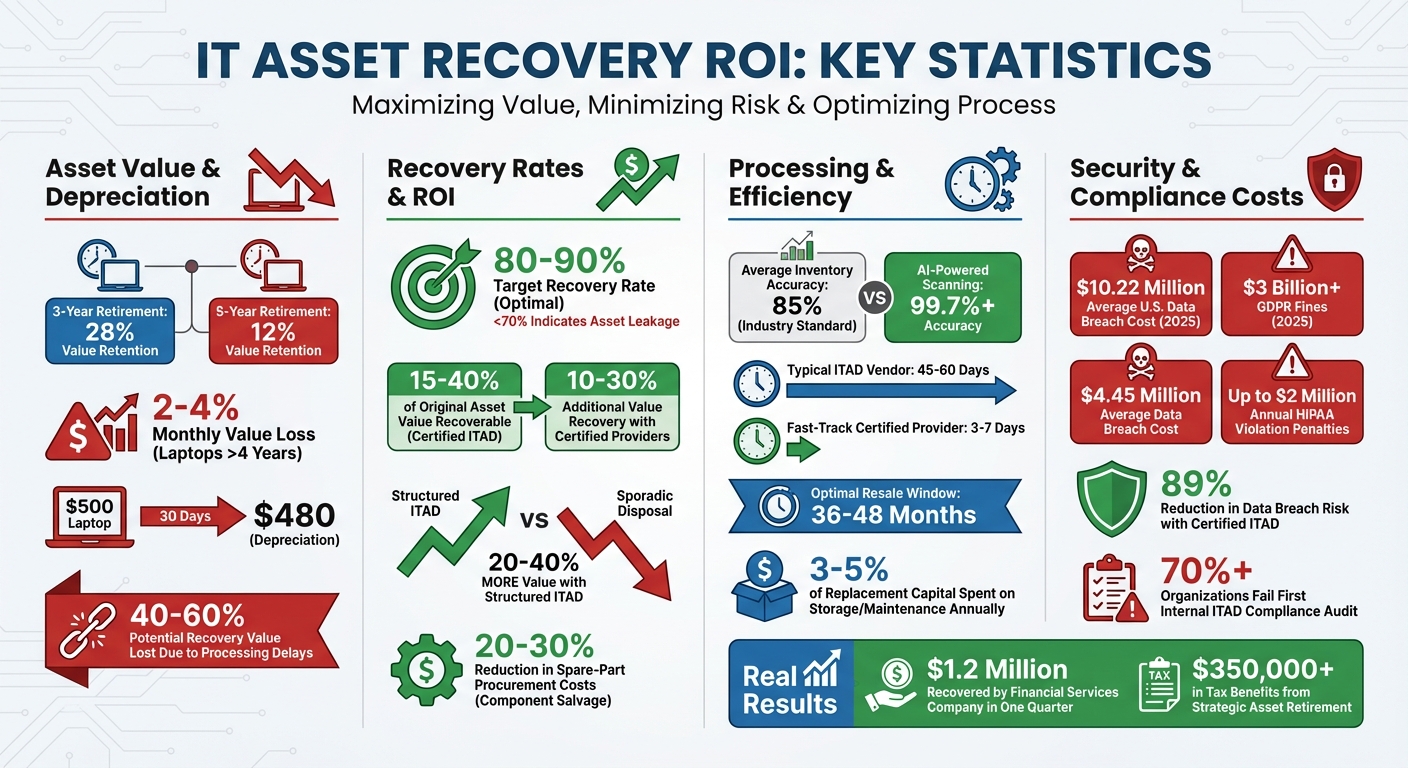
IT Asset Recovery ROI Statistics and Key Metrics
1. Create a Complete Asset Inventory
Asset Tracking and Inventory Accuracy
Building a detailed and accurate inventory is the first step in effective IT asset recovery. Without knowing exactly what hardware you own, you risk undervaluing assets, losing track of their locations, or letting them sit unused - each of which can chip away at their resale value over time.
On average, inventory accuracy hovers around 85%. This leaves room for errors like mis-scanned serial numbers or mislabeled items, which can lead to significant losses. In some cases, these mistakes even result in data breaches, with costs reaching six or seven figures.
Make sure to catalog all end-of-life hardware, including desktops, laptops, servers, storage arrays, networking equipment, mobile devices, and peripherals. For each item, record key details like the manufacturer, model, serial number, asset tag, age, usage history, maintenance records, and overall condition. This information is critical for determining whether an item is better suited for resale or component recovery.
Leveraging AI-powered scanning tools can dramatically improve accuracy, achieving rates of over 99.7%. These tools excel at reading drive labels with precision. Additionally, IoT trackers can provide real-time visibility into asset locations.
A well-maintained inventory system reduces unnecessary storage and maintenance costs, which typically account for 3–5% of replacement capital annually. It also helps you aim for an 80–90% recovery rate - falling below 70% may indicate asset leakage. Regular audits and centralized tracking of idle or "zombie" assets are crucial for maximizing returns. This kind of comprehensive inventory not only streamlines processing but also sets the stage for boosting overall recovery efficiency.
sbb-itb-855056e
2. Speed Up Processing and Turnaround Time
Processing Speed and Turnaround Time
Laptops lose value quickly - depreciating by 2–4% per month after four years. For example, a $500 laptop could drop to $480 in just 30 days if left sitting idle.
Most ITAD vendors take 45 to 60 days to wrap up a project and provide final reports. However, some providers can complete the same tasks in just 3 to 7 business days. This faster pace helps preserve value before market conditions shift. Devices retired after 3 years typically retain about 28% of their original value, while those held onto for 5 years might only recover around 12%. Acting quickly is essential to maximize returns.
Securis explains, "A 60-day processing time from a typical ITAD provider cuts deeply into resale value. Faster turnaround is not just operationally convenient. It is financially strategic."
Delays in decommissioning can cost organizations 40–60% of potential recovery value. To avoid this, consider setting triggers like employee offboarding, lease expiration, or hitting the 36-month mark to initiate immediate processing. Automated tools can also streamline this process by sending return requests and shipping labels to remote employees as soon as they offboard, cutting down transit delays with electronics waste pick-up services.
Speed isn't just about protecting resale value - it also safeguards the equipment itself. Extended storage can lead to battery issues and cosmetic damage, both of which lower resale prices. By processing devices quickly, you keep them in better condition, ready for resale when demand is still strong.
3. Time Your Sales Based on Market Demand
Market Conditions and Resale Timing
When it comes to reselling business laptops and desktops, timing is everything. The sweet spot for selling these devices is typically between 36 and 48 months. After the four-year mark, depreciation speeds up, with values dropping by 2–4% each month. Acting within this window is crucial to maximize returns.
Keep an eye on key indicators like lease expirations, warranty deadlines, or increasing maintenance costs to decide the best time to sell. Companies that stick to a structured IT asset disposition (ITAD) schedule can recover 20–40% more value compared to those using sporadic disposal methods.
Market demand isn’t static. Right now, late-model business equipment is in high demand, driven by factors like cloud expansion and school technology upgrades. To avoid flooding the market and driving prices down, consider selling in smaller batches or collaborating with your ITAD provider to strategically time your sales.
Securis highlights, "The secondary market for late-model IT equipment is booming, and organizations that treat IT Asset Disposition (ITAD) as a strategic function are unlocking revenue."
Even if entire devices lose their appeal, individual components like RAM, SSDs, and GPUs often hold strong value in the secondary market. For older devices that no longer fetch a good price as a whole, salvaging and selling high-value parts can still provide solid returns. Letting equipment gather dust isn’t just inefficient - it directly eats into your profits month after month. By aligning your sales with market demand, you’ll not only maximize value but also set the stage for secure data handling in the next steps.
4. Use Secure Data Destruction Methods
Data Security and Compliance
Protecting sensitive data isn't just about compliance - it's also about protecting your bottom line. In 2025, the average cost of a data breach in the U.S. soared to $10.22 million, while GDPR-related fines exceeded $3 billion in the same year. A single breach can erase years of IT asset recovery efforts.
The method you choose for data destruction plays a huge role in both security and return on investment (ROI). For example, software-based data sanitization or cryptographic erasure keeps devices functional, which is ideal for resale. On the other hand, physical shredding reduces devices to scrap metal value. Picking the right method not only minimizes the risk of breaches but also helps retain a device's resale potential. By following certified IT asset disposition (ITAD) protocols, organizations can recover 15% to 40% of an asset's original value while cutting data breach risks by 89%. Sticking to certified destruction methods ensures compliance, protects asset value, and strengthens trust.
Vendor Certifications and Transparency
Every device processed should come with a Certificate of Destruction (CoD), which includes critical details like the serial number, destruction method, and timestamp of processing. This documentation not only helps with audits but also protects against regulatory penalties by proving you’ve taken the necessary steps.
Your ITAD provider should comply with NIST SP 800-88 standards, which cover secure sanitization methods like logical erasure, purging, or complete destruction. For newer devices with resale potential, NIST-compliant software wiping is the best choice to maintain value. For highly sensitive data, on-site shredding ensures that no data-bearing device leaves your premises intact.
Look for providers with recognized certifications such as R2v3 (Responsible Recycling), e-Stewards, and NAID AAA. For example, Rica Recycling offers secure data destruction with verified Certificates of Destruction, ensuring compliance with California's strict e-waste laws and maintaining a 100% landfill-free policy. Acting quickly on data destruction is key to preserving asset value during the recovery process.
5. Recover and Reuse Components and Parts
Component Salvageability and Reuse
When devices reach the end of their lifecycle, there’s often untapped value hiding in their individual components. Even if a laptop or server can’t be resold as a whole, parts like RAM modules, SSDs, GPUs, and power supplies frequently retain considerable worth. By salvaging these components, organizations can cut their spare-part procurement costs by an impressive 20–30%. Many companies have already adopted this approach, recovering millions of parts for reuse, resale, or donation while also hitting sustainability goals faster than expected.
The trick lies in identifying the right components to salvage. High-end parts, such as enterprise SSDs and DDR4/DDR5 RAM, are particularly valuable because they’re easy to test and repurpose. Before discarding outdated devices, it’s worth assessing which components could be reused or sold. For example, AT&T reduces its expenses for new replacement parts by harvesting components from devices that are beyond repair. This method dovetails with rapid processing strategies, amplifying the return on investment (ROI) from retired hardware.
Processing Speed and Turnaround Time
Speed is everything when it comes to salvaging components. Once a device hits its fourth year, the value of its components can drop by 2–4% each month. A skilled IT asset disposition (ITAD) partner can help organizations retain more value by quickly repairing or replacing components for resale. Cisco’s "Takeback and Reuse" program is a great example of this in action. The program collects outdated networking equipment, refurbishes usable items for resale through its "Cisco Refresh" line, and breaks down non-reusable gear to salvage valuable parts.
However, it’s important to avoid dismantling parts from fully functional devices unless absolutely necessary. A complete, well-maintained unit generally fetches a higher resale price than selling its components individually. For equipment that’s genuinely at the end of its life, adopting a "reuse first" strategy - by leveraging salvaged parts from internal inventories - can help cut procurement costs and stretch ROI even further.
6. Build a Clear ITAD Policy
Structuring Your ITAD Policy and Staying Compliant
Once you've fine-tuned your asset processing and recovery strategies, the next step is creating a well-defined ITAD policy. This formal document lays out the rules for handling retired IT equipment. It should cover everything: when to repair versus replace, how to decommission and destroy data, methods for reuse or recycling, and protocols for resale or donation. Without a clear plan, equipment can end up in unsecured storage - losing value and posing serious security risks. Alicia Syx from Sycamore International highlights the importance of control:
"If you just have random equipment on some floor that's not a controlled, secure space - that's concerning. You definitely want to know where your equipment is".
Your policy also needs to align with major regulations like GDPR, HIPAA, and PCI-DSS. This alignment is critical since the average cost of a data breach is a staggering $4.45 million. To stay ahead, assign specific roles - like an IT Director for approvals - and schedule regular reviews, especially when regulations change. This ensures your operational practices are backed by a solid, regulatory-compliant framework.
Prioritizing Data Security and Compliance
Your ITAD policy should clearly outline compliance with established data sanitization standards. It’s essential to maintain detailed records for every retired asset, including serialized inventory reports and audit-ready documentation. As Securis emphasizes:
"No amount of remarketing revenue is worth a compliance violation or data exposure".
The policy should also detail the decommissioning process. Before any equipment leaves your premises, it’s vital to revoke VPN tokens, SaaS logins, and MDM access. Additionally, removing company logos and asset tags is a must to prevent unauthorized identification of your hardware. These steps are crucial for avoiding potential security breaches.
Vendor Certifications and Clear Reporting
Strengthen your ITAD policy by setting high standards for vendor partnerships. Work only with certified vendors - such as those holding R2v3 or e-Stewards certifications - to ensure they meet strict security and environmental requirements. Transparency is equally important. Choose vendors who provide real-time access to item-level resale data through online portals, rather than making you wait 45 to 60 days for final reports. This level of visibility is invaluable for tracking sustainability metrics, such as CO₂ savings and the volume of e-waste diverted from landfills, which are key for ESG reporting.
IT Asset Disposition & Computer Liquidation | Maximize Value from Surplus IT Equipment
7. Work with a Certified ITAD Provider
After establishing a thorough inventory and efficient processing system, teaming up with a certified ITAD provider is a smart move to protect your ROI and maintain compliance.
Vendor Certifications and Transparency
Certified ITAD providers can help you recover an extra 10–30% of your asset value. When evaluating providers, look for certifications like R2v3 (Responsible Recycling), e-Stewards, and NAID AAA. These certifications aren’t just badges - they represent rigorous standards. For instance:
- R2v3 ensures top-tier recycling practices, worker safety, and data security through independent audits managed by SERI.
- e-Stewards prohibits exporting hazardous e-waste to developing countries and integrates NAID AAA standards for data destruction.
- NAID AAA is the gold standard for data destruction, requiring unannounced audits to verify proper hard drive shredding, data wiping, and physical security measures.
Some vendors may claim compliance with NIST 800-88 guidelines, but as Securis points out:
"NIST 800-88 is not a certification - it's a standard. Only third-party audits like NAID AAA can confirm it's being followed correctly".
Without third-party verification, you're left to trust the vendor’s word, which isn’t enough when a data breach could cost your business dearly. These certifications not only protect your data but also simplify compliance and maximize asset recovery.
Processing Speed and Turnaround Time
Time is money, especially when it comes to IT assets. Certified providers typically complete projects within 3–7 business days, helping you avoid the depreciation that occurs with every passing month. For example, laptops lose 2–4% of their resale value per month after four years of use.
As one expert noted:
"A 60-day processing time from a typical ITAD provider cuts deeply into resale value. Faster turnaround is not just operationally convenient. It is financially strategic".
By acting quickly, certified providers help preserve the value of your retiring devices.
Data Security and Compliance
Certified ITAD providers ensure a documented chain of custody, complete with serialized inventory reports and Certificates of Destruction. These records are critical for passing compliance audits under laws like GDPR, HIPAA, and PCI-DSS. Statistics show that over 70% of organizations fail their first ITAD compliance audit when handling the process internally. And with HIPAA violations carrying penalties of up to $2 million per year, the stakes are high.
Securis puts it bluntly:
"No amount of remarketing revenue is worth a compliance violation or data exposure".
Certified providers also help you navigate complex regulations, like the Basel Convention amendments effective January 1, 2025, which require Prior Informed Consent (PIC) for cross-border e-waste shipments. These practices not only protect your business but also enhance recovery value.
Asset Tracking and Inventory Accuracy
Advanced asset tracking is another key benefit of working with certified providers. Using AI-powered scanning tools, they achieve near-perfect accuracy and offer 24/7 client portal access for real-time updates. This level of precision not only safeguards your bottom line but also ensures you have the audit-ready documentation your leadership team requires.
Rica Recycling (https://ricarecycling.com) provides certified electronics recycling and IT asset recovery services in the San Francisco Bay Area. Offering secure data destruction with Certificates of Destruction and a landfill-free policy, Rica Recycling ensures your retired assets are handled responsibly while maximizing their recovery value.
ITAD Provider Comparison Table
When selecting an ITAD provider, it’s essential to evaluate them on a few key factors: certifications, processing speed, data security, reporting capabilities, environmental practices, and revenue-sharing policies. Below is a table that breaks down these criteria and highlights how they can impact your ROI.
| Factor | What to Look For | Example: Rica Recycling |
|---|---|---|
| Certifications | R2v3, NAID AAA, e-Stewards, ISO 14001 | Certified electronics recycling in line with California e-waste regulations |
| Processing Time | 3–7 business days for project completion | Quick turnaround to maintain asset value |
| Data Destruction | Certificates of Destruction with serialized tracking | Secure destruction methods with detailed certificates provided |
| Reporting & Tracking | 24/7 portal access and audit-ready reports | Comprehensive documentation to simplify compliance audits |
| Environmental Policy | 100% landfill-free and sustainable practices | Fully landfill-free operations that align with sustainability goals |
| Revenue Sharing | Transparent sharing based on real-time market values | Services designed to recover maximum value from retired IT equipment |
This breakdown illustrates how these elements combine to optimize the recovery of value from decommissioned IT assets.
Take Rica Recycling as an example (https://ricarecycling.com). Serving the San Francisco Bay Area, they offer certified ITAD services tailored for secure data destruction and environmentally conscious practices. Their landfill-free commitment ensures retired IT assets are processed sustainably while adhering to California’s strict e-waste regulations. Additionally, their transparent processes, including Certificates of Destruction, help businesses prioritize data security while recovering value from unused equipment.
Speed is another critical factor - delays in processing can lead to significant depreciation of IT assets. Choosing a provider like Rica Recycling, with fast turnaround times, can have a direct impact on your financial outcomes when managing retired equipment.
Conclusion
By applying the seven strategies outlined earlier, IT asset recovery can shift from being a simple disposal task to a smart investment strategy. Steps like keeping detailed inventories, speeding up processing, timing sales effectively, securely destroying data, recovering usable components, setting clear policies, and collaborating with certified providers can help businesses reclaim significant value from their retired assets.
For example, a multinational financial services company working with Rica Recycling managed to recover $1.2 million from decommissioned IT equipment in just one quarter. They reinvested this capital into modernizing their IT infrastructure and strengthening cybersecurity measures. Similarly, a healthcare organization secured over $350,000 in tax benefits through strategic year-end asset retirements, boosting their IT lifecycle management ROI.
These cases highlight how well-planned ITAD strategies can directly support organizational growth. Reclaimed funds can be used to finance essential IT upgrades, move to the cloud, or improve cybersecurity. Additionally, frequent technology refresh cycles become more feasible, ensuring teams always have access to the latest hardware without overstretching budgets. Companies with optimized recovery programs often achieve recovery rates of 80% to 90%, while those falling below 70% risk missing out on considerable value.
"The question is no longer whether your organization can afford professional ITAD services, but whether you can afford to operate without them." - CompuCycle
Rica Recycling, based in the San Francisco Bay Area, offers certified ITAD services that focus on maximizing recovered value while adhering to strict environmental and security standards. Their landfill-free processes and quick turnaround times transform outdated equipment into funding that drives business growth. Learn more at Rica Recycling.
FAQs
How can I keep my IT asset inventory accurate and up-to-date?
To keep your IT asset inventory accurate and up-to-date, start by establishing a clear, consistent process for managing it. This involves creating a detailed record of all assets, noting their condition, configurations, and maintenance history. Regularly updating this inventory is crucial to avoid errors and ensure everything stays current.
Leveraging IT asset management (ITAM) tools can simplify tracking and help maintain precise records. Periodic audits and reconciliations, especially during key moments like year-end or before decommissioning assets, add an extra layer of accuracy. These steps not only ensure all assets are accounted for but also support compliance, security, and efficient recovery plans.
When is the best time to sell retired IT equipment to maximize ROI?
To get the most out of your IT equipment, sell it while it’s still in good working order and before it becomes outdated. Hardware loses value quickly, especially when newer models hit the market. Timing your sale just before major product launches can help you preserve more of its value.
It’s also smart to keep an eye on market demand and industry trends. Selling during times of high demand and limited supply often leads to better resale prices. By creating a proactive IT asset disposition plan, you can strategically schedule sales instead of waiting for equipment to fail or become obsolete. This not only improves ROI but also helps maintain compliance and protect data security.
Why is partnering with a certified ITAD provider important for maximizing ROI?
Working with a certified ITAD provider can help you get the most out of your retired IT assets. These specialists focus on secure data destruction, staying compliant with legal requirements, and following responsible recycling methods. This not only protects your business from potential risks and penalties but also ensures everything is handled properly.
Their know-how allows you to recover as much value as possible from outdated electronics, all while safeguarding your data and aligning your organization with environmentally responsible practices.