
How ITAD Supports Circular Economy in Schools
Schools in the U.S. face a growing challenge: managing outdated tech like computers and tablets. Improper disposal leads to waste and security risks. IT Asset Disposition (ITAD) offers a structured way to recycle, repurpose, or securely dispose of these devices. Here's how ITAD helps:
- Reduces Waste: ITAD keeps devices in use longer through refurbishment and responsible recycling, aligning with circular economy goals.
- Protects Data: Ensures sensitive student and school data is securely erased.
- Saves Money: Schools can recover value from old devices through resale or donation, funding new tech and programs.
- Ensures Compliance: Certified ITAD providers help schools meet e-waste laws and data protection regulations.
Circular Economy in Schools - CEIC Case Study
sbb-itb-855056e
What ITAD Is and How It Supports the Circular Economy
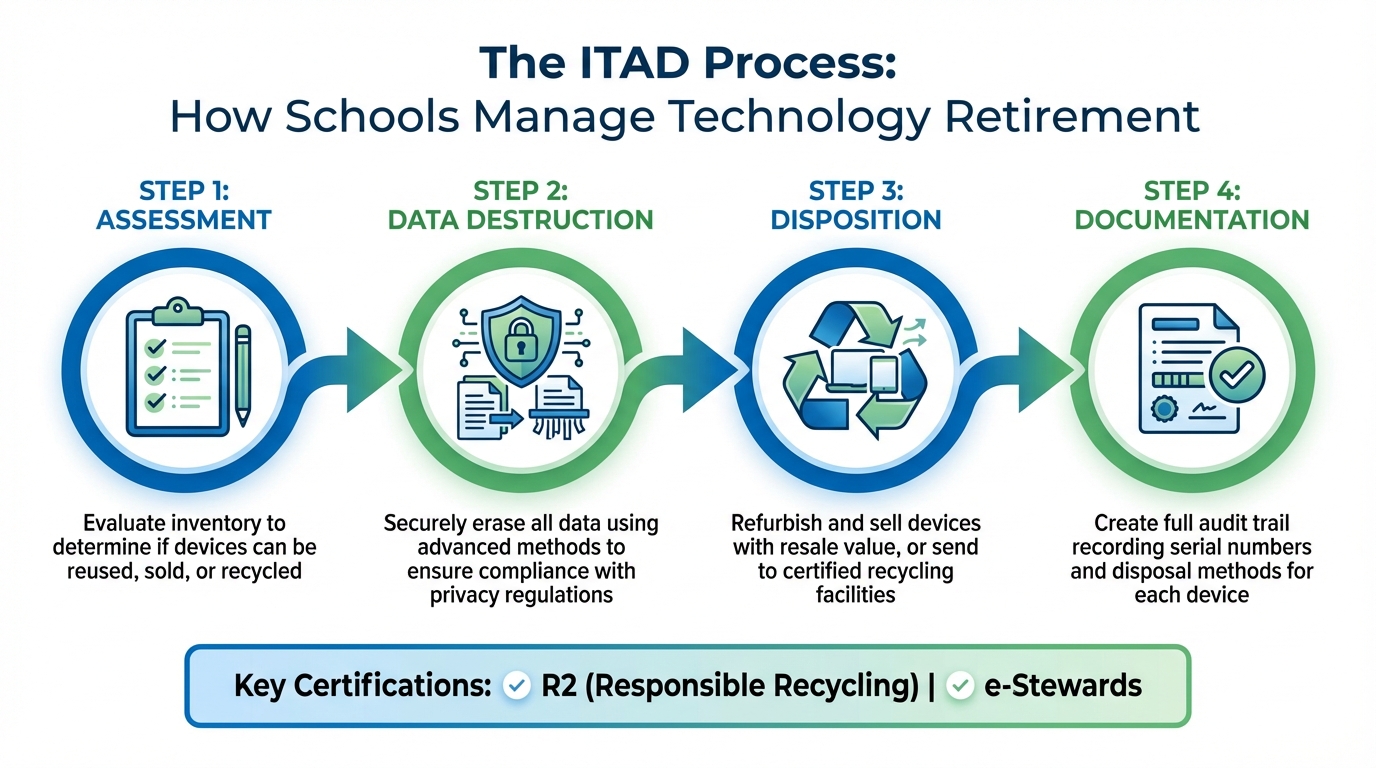
4-Step ITAD Process for Schools: Assessment to Documentation
What is ITAD?
IT Asset Disposition (ITAD) is a structured process designed to manage the retirement of technology in an organized and secure way. It typically unfolds in four main steps: assessment, data destruction, disposition, and documentation.
- Assessment: Schools evaluate their inventory to determine whether devices can be reused, sold, or need to be recycled.
- Data Destruction: All data is securely erased using advanced methods to ensure compliance with privacy regulations.
- Disposition: Devices with resale value are refurbished or sold, while others are sent to certified recycling facilities.
- Documentation: A full audit trail is created, recording details like serial numbers and disposal methods for each device.
For educational institutions, ITAD is more than just a disposal process - it’s a critical tool for staying compliant with data protection laws and achieving certifications like R2 (Responsible Recycling) or e-Stewards. These certifications ensure that ITAD providers follow strict guidelines for security and environmentally responsible practices.
By adhering to these steps, ITAD plays a vital role in supporting a sustainable approach to retiring technology.
How ITAD Connects to Circular Economy Goals
In schools, ITAD is not just about safeguarding data - it’s also a practical way to promote sustainable resource use.
The circular economy focuses on keeping materials in circulation for as long as possible, and ITAD fits perfectly into this model. Instead of recycling devices right away, ITAD prioritizes extending their lifecycle. Usable laptops, tablets, and other electronics are refurbished, sold, or even donated, reducing waste and offering affordable tech solutions to others.
For devices that are no longer functional, ITAD ensures proper recycling at specialized facilities. These centers recover valuable materials like copper, gold, and rare earth elements, which can then be used to produce new electronics. This process reduces reliance on mining raw materials and lowers the environmental impact of manufacturing.
Why Schools Benefit from ITAD
Environmental Advantages
Schools generate a lot of e-waste when upgrading their technology. IT asset disposition (ITAD) helps tackle this issue by keeping outdated devices out of landfills and ensuring hazardous materials are handled properly. Certified ITAD providers follow strict recycling standards to minimize environmental harm.
Refurbishing and reselling functional devices like laptops and tablets also extends their lifespan. This reduces the need for manufacturing new equipment, conserving natural resources and cutting down on carbon emissions. Many states even require schools to meet recycling standards and ban landfill disposal of electronics. On top of these eco-friendly practices, schools can also gain financial benefits through asset recovery programs.
Financial Returns from Asset Recovery
ITAD doesn't just help the planet - it can also boost school budgets. Selling off old devices can bring in extra revenue, especially when working with ITAD providers that offer revenue-sharing models. These funds can then be reinvested in new technology or other educational needs.
Additionally, ITAD providers ensure compliance with data security regulations, giving schools peace of mind while unlocking financial value.
Meeting Compliance and Data Security Requirements
Schools are required to securely destroy devices that store sensitive information under FERPA guidelines. ITAD providers use trusted methods, like those outlined in NIST Special Publication 800-88 Revision 1, to ensure data is completely erased ("Clear, Purge, or Destroy").
Beyond data security, schools must also adhere to state-specific e-waste laws. For instance, California's SB 20 and Washington's E-Cycle programs mandate detailed reporting of recycling efforts and ban the disposal of electronics in landfills. Certified ITAD providers track devices with serial numbers and maintain audit trails, helping schools stay compliant and avoid legal risks. This thorough approach not only safeguards data but also supports sustainable management of technology throughout its lifecycle.
How to Implement ITAD in Your School
Step 1: Take Stock of Your IT Assets
Start by creating a detailed inventory of all your school's IT equipment. Include key details like serial numbers, purchase dates, and the current condition of each item. This will help you identify which devices can be reused, sold, donated, or recycled. Assign your IT or facilities team to keep this list up to date. Once your inventory is ready, choose a reliable ITAD partner to guide you through the process.
Step 2: Partner with a Certified ITAD Provider Like Rica Recycling
Choose an ITAD provider with the right certifications to ensure compliance with California's e-waste regulations. Verify that they also meet standards for secure data destruction and environmentally responsible practices. Rica Recycling is a great example - they offer certified electronics recycling, convenient pickup services, and a commitment to keeping devices out of landfills. With a dependable partner on board, you can shift your focus to safeguarding data and organizing logistics.
Step 3: Secure Data and Plan Logistics
Once you've selected your ITAD provider, prioritize data protection. Use secure methods like software wiping or physical drive destruction following NIST 800-88 guidelines. Develop a formal ITAD policy, train your staff on proper handling procedures, and ensure your provider oversees the collection, transportation, and compliance documentation for your devices.
Step 4: Maximize Value Through Reuse and Refurbishment
Evaluate which devices can be refurbished, resold, donated, or redeployed. Refurbishing or donating working equipment can extend its use and promote educational access, while selling valuable items can bring in funds for new technology investments.
Step 5: Track and Report Your Progress
Monitor the results of your ITAD program by generating detailed reports. Include metrics like the amount of material diverted from landfills, the weight of recycled items, and how assets were disposed of. Use these insights to fine-tune your program and stay aligned with your sustainability objectives.
Conclusion
ITAD transforms how schools manage technology, moving away from the wasteful "take-make-dispose" approach to one that focuses on reuse, refurbishment, and responsible recycling. This shift helps cut down on e-waste, conserve natural resources, and lower greenhouse gas emissions, aligning with long-term environmental goals.
A well-implemented ITAD program does more than recover the value of outdated devices - it ensures data protection and guarantees secure data destruction. When working with a certified partner like Rica Recycling, schools can achieve 100% landfill-free e-waste management while staying compliant with regulations.
Success in ITAD depends on consistent operational practices. Schools should keep their IT inventory updated, plan regular audits and disposals, and collaborate with certified providers who offer detailed reports and destruction certificates. By making ITAD a core part of their technology strategy, schools can create a cycle where the value from retired assets helps fund new educational tools and resources.
FAQs
Which devices should our school send to ITAD first?
Your school should focus on addressing outdated, broken, or non-functional devices like old computers, laptops, and servers. Sending these items to ITAD (IT Asset Disposition) services ensures secure data destruction, helps meet e-waste compliance standards, and contributes to a more responsible approach to handling electronic waste.
How can we prove student data was securely erased?
Schools can obtain certification or documentation from their IT asset disposition provider, like Rica Recycling, to verify that secure data destruction has been carried out. This may involve procedures such as data wiping or physical destruction, ensuring alignment with required standards. These records offer peace of mind that sensitive student information has been managed responsibly and securely.
What reports should we track for circular economy goals?
To keep tabs on circular economy goals in schools through ITAD, focus on these key reporting areas:
- Electronics recycled or refurbished: This helps measure how effectively resources are being recovered.
- Data destruction and secure disposal: Ensures adherence to security standards.
- Environmental impacts: Tracks metrics like reduced landfill waste and energy conservation.
Additionally, financial reports detailing cost savings and lifecycle analyses can shed light on the economic advantages. Regular reviews of these reports ensure accountability and steady progress toward sustainability goals.