
How R2v3 Improves Recycling Transparency
If you can’t track old devices after pickup, you’re guessing. This article shows how R2v3 gives you records you can check: site-specific certification, chain-of-custody logs, downstream vendor records, and serial-level data destruction details.
Here’s the short version:
The problem: studies found that 40% of 152 tracked deliveries to U.S. electronics recyclers were exported overseas, and 96% of those exports were likely illegal. Other tracking studies found about one-third of devices dropped off for recycling in the U.S. later moved offshore.
What R2v3 does: it ties certification to one facility and a defined scope, then backs that up with third-party audits.
What gets tracked: inbound loads, processing steps, outbound shipments, weights, dates, destinations, and downstream vendors.
What data security adds: data-bearing devices are tracked by serial number or asset tag, with sanitization records aligned to NIST SP 800-88 methods like Clear, Purge, or Destroy.
What you should ask for: pickup manifest, serialized asset report, sanitization or destruction certificate, downstream processor details, and weight/disposition summaries.
In other words: R2v3 is less about a badge and more about the paper trail. I’d use it as a way to check where equipment went, how data was handled, and whether the records fit your audit, compliance, and reporting needs.
How R2v3 Makes Recycling Visible and Verifiable
Site-Specific Certification, Defined Scope, and Third-Party Audits
R2v3 ties certification to one facility and a defined scope of work. So if a company runs multiple sites, it can only claim R2v3 for the locations that are actually certified.[1][11] That matters in practice. A procurement team can require one named certified facility for a specific equipment stream. For example, a Bay Area organization can write into its vendor contract that only that certified location may handle its data-bearing devices.[11]
Third-party audits back that up. Independent certification audits check written procedures, training records, incident logs, and material flow records to confirm that a recycler’s claims line up with what’s happening on the floor.[11][12] Facilities also have to keep those records up to date as things change. That includes vendor approvals, risk assessments, and shipment-level traceability logs when vendors shift or new material types come in.[7][13]
The end result is a dated record showing vendor approval and final destination.
That facility-level traceability is what makes the chain of custody verifiable.
Tracking Materials from Intake to Final Disposition
R2v3 tracks incoming material, internal processing changes, and outgoing shipments by category, quantity, and destination.[1][10]
In plain terms, it creates a continuous record from intake to final disposition.[1][10]
Once those movements are logged, the records are ready for audit review.
Records That Support Audits, Compliance, and Internal Reporting
R2v3 records support audits, compliance work, and internal reporting. Certified facilities must maintain time-stamped documentation that covers:
inbound weights and counts
processing dates and methods
outbound shipment details, including destinations and treatment methods[1][6]
Downstream due diligence records also need to show the date of each review, the reviewer’s credentials, the documents examined, the findings, and any corrective actions required.[8][13]
Those same records do more than satisfy an auditor. They also support ESG reporting, waste-diversion metrics, and regulatory filings.[1][10][13] The same logs used during an audit can feed straight into those reports: weights and dates support waste-diversion metrics, while documented due diligence supports risk management narratives.[1][10][13]
That is the level of detail auditors need.
The same traceability also applies to device-level data sanitization.
Why R2v3 Certification Matters for Secure IT Asset Disposition in California
How R2v3 Improves Data Security Transparency
That chain of custody has to continue all the way to data destruction. A recycling receipt alone doesn't cut it. Organizations need records that show the data was actually sanitized.
Device-Level Tracking and NIST-Aligned Data Sanitization
R2v3 requires a documented Data Security Plan and Data Sanitization Plan that cover device types, data classification, approved methods, and assigned responsibilities.[21][19][4]
The key point is that tracking happens at the device level. R2v3-certified facilities record each asset by serial number or asset tag from receipt through sanitization and final disposition.[16][22][18] So instead of seeing that a pallet or shipment was processed, an organization can trace what happened to a specific laptop from the finance team or a server from a school district.
R2v3 lines up sanitization with NIST SP 800-88: Clear, Purge, or Destroy, and the method used must be logged for each device.[5][9][20]
R2v3 also adds quality control to the process. A percentage of sanitized devices must be checked by an independent verification step, and any drive that fails sanitization has to be escalated to physical destruction through hard drive shredding.[16][5][17]
What Auditable Data Destruction Documentation Looks Like
For data destruction, transparency comes down to records that show each device was handled the right way.
R2v3 documentation should be audit-ready. A full record set includes:
the chain-of-custody log
the serialized asset report
the sanitization log
the final certificate of destruction or sanitization[5][13][18][19]
A generic certificate might be enough for internal filing, but it's not much help if an organization needs to show due diligence to auditors, insurers, or regulators.
Strong documentation should also note exceptions, such as damaged devices, missing serial numbers, and nonstandard methods.
What R2v3 Transparency Looks Like in Practice for Bay Area Organizations
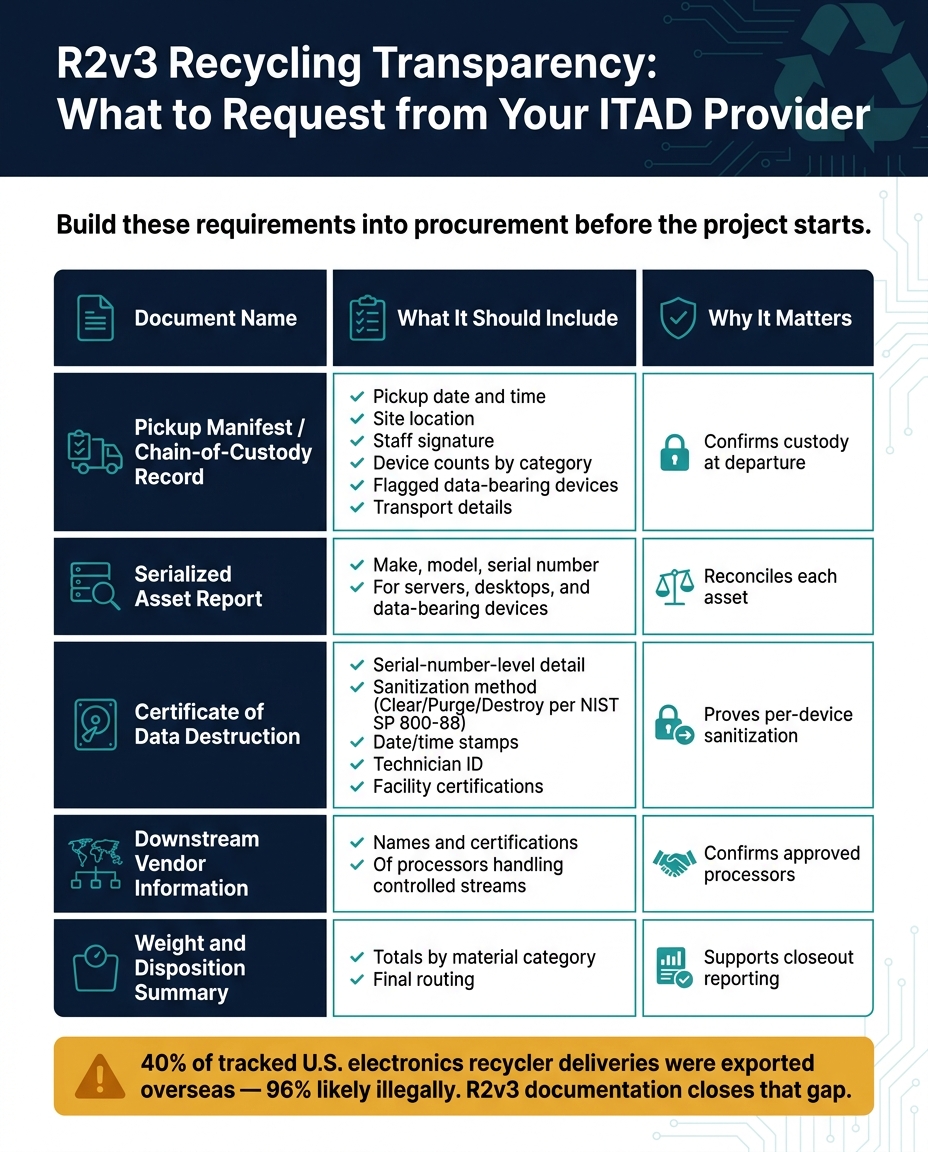
R2v3 Recycling Transparency: What to Request from Your ITAD Provider
Practical Examples for Schools, Offices, and IT Refresh Projects
R2v3 turns project closeout from a vague handoff into a paper trail you can actually use. That matters when you need to wrap up a project cleanly and get through audit review without scrambling for missing records.
Here’s what that looks like in common Bay Area situations.
For a school district retiring student laptops, the recordkeeping starts at pickup. The manifest should show the pickup date and time, the school site, the staff member releasing the equipment, and counts by device category.[23][15] Any data-bearing devices should be marked for sanitization.[23][1][15] After processing, the district should get a serialized asset report plus a Certificate of Data Destruction. That certificate should list each device by serial number, the sanitization method used, the processing date, and the technician ID.[23][24][15]
For an office decommissioning desktops and monitors during a move or lease transition, the main deliverables are simpler but still matter. You’ll want a pickup record with asset counts, weight summaries by material category, and downstream routing details that show where the equipment went after processing. Those records show final disposition.
For a Bay Area tech company or data center replacing servers and network gear, the bar should be higher. Ask for serial-level tracking and device-specific destruction logs.[24][2][1] Each server, storage array, and other data-bearing device should be tracked by its serial number from pickup through final disposition, with records showing when it left the site, when it was received, and where it ended up.[23][15] Downstream vendor records should also show which R2v3-certified or other qualified processors handled leftover hardware and materials, and they should verify that devices and parts did not go to unvetted handlers or landfills.[24][1][15]
What to Request from a Recycler or ITAD Provider
Before you sign a service agreement, ask for a defined documentation package, not just a generic recycling receipt. Think of this as the minimum procurement checklist.
Document | What It Should Include | Why It Matters |
|---|---|---|
Pickup manifest / chain-of-custody record | Pickup date and time, site location, staff signature, device counts by category, flagged data-bearing devices, transport details | Confirms custody at departure |
Serialized asset report | Make, model, serial number for servers, desktops, and data-bearing devices | Reconciles each asset |
Certificate of Data Destruction | Serial-number-level detail, sanitization method, date/time stamps, technician ID, facility certifications | Proves per-device sanitization |
Downstream vendor information | Names and certifications of processors handling controlled streams | Confirms approved processors |
Weight and disposition summary | Totals by material category, final routing | Supports closeout reporting |
Build these requirements into procurement before the project starts.
Conclusion: How R2v3 Builds Trust in Electronics Recycling
Once electronics leave your building, visibility often stops. R2v3 brings that visibility back with documented chain of custody, verified downstream handling, and device-level data destruction records.
Put together, these controls make recycling measurable. Site-specific certification, a defined scope, and independent audits make a provider’s claims checkable instead of self-reported. The result is a complete, auditable record for every asset you retire.[3][26][14][27][25]
For Bay Area organizations, that means closeout documentation you can actually use. It can support internal audits, ESG disclosures, and compliance evidence.
The main question is simple: Do the provider’s scope and records support your data, compliance, and sustainability goals? That’s what turns recycling into a documented part of your risk management program.
Rica Recycling supports this model with certified electronics recycling and secure data destruction across the San Francisco Bay Area.
FAQs
How do I verify a recycler’s R2v3 scope?
Check the official website of the certifying body, such as SERI, to confirm the recycler’s current certification status and the activities they’re approved to perform. You can also ask for a copy of their certification document so you can review the exact scope for yourself.
Make sure the recycler’s R2v3 certification lines up with what you need. That includes their downstream due diligence process and the material types they’re approved to handle.
What records should I request for data destruction?
Request a serialized Certificate of Destruction for every asset. Each record should include the serial number, make, model, and destruction status for each item, not just a total device count.
Also ask for data sanitization logs that show the method used, technician ID, and timestamps. These records create the audit trail needed for compliance and audit readiness.
Does R2v3 track devices after they leave the first facility?
Yes. R2v3 requires certified facilities to keep accountability for electronics through their full lifecycle, including after they leave the first facility.
It does this through downstream due diligence and a secure chain of custody, with documented and audited handoffs to help make sure devices are tracked through final disposition.