Before recycling an appliance, I check whether it contains refrigerant and arrange recovery before dismantling. A unit that no longer cools may still contain refrigerant. Leaks can harm the atmosphere, put workers at risk, and delay recycling.
I use 3 checks before the recycling handoff:
Identify and protect: Read the appliance label, keep coils and lines intact, and stop handling it if I suspect a leak.
Recover and document: Arrange professional recovery, then keep the recovery records, invoice, and handoff receipts together.
Confirm drop-off: Check acceptance, fees, hours, and required paperwork with Rica Recycling. Bay Area residential appliance recycling is drop-off only at its Hayward facility; it does not accept unrecovered refrigerant, active refrigerant leaks, or gas-powered appliances.
My rule: <u>verify recovery before transport</u>. Recovery is one step - not a replacement for removing other hazardous parts and recycling the remaining materials.
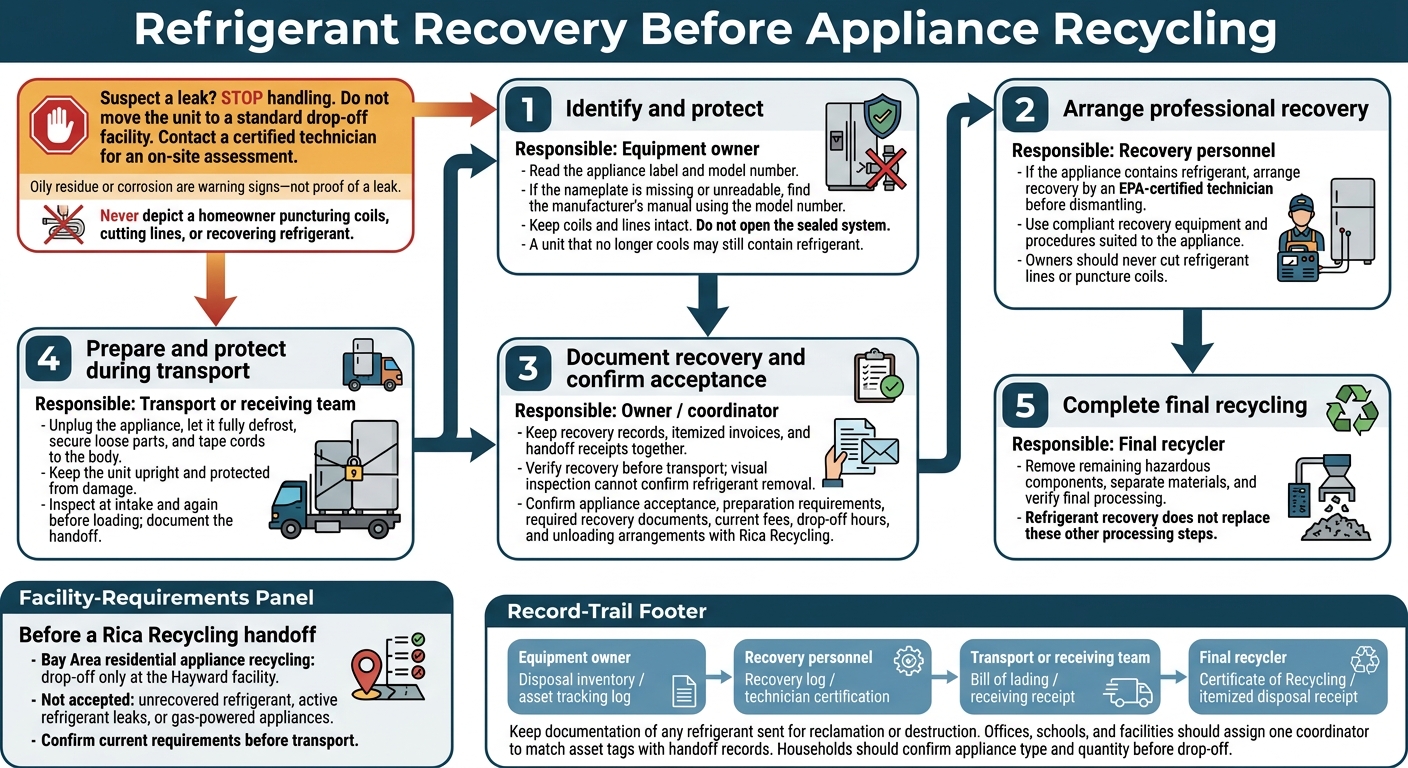
Refrigerant Recovery Before Appliance Recycling
Identify Appliances That Contain Refrigerant
Appliance Types and Leak Warning Signs
Before collection, check each appliance’s label and model number. Look for the refrigerant type on the nameplate, usually on the back or inside the unit. If the plate is missing or unreadable, use the model number to find the manufacturer’s manual. Do not open the sealed system. Use these details to confirm whether refrigerant recovery is required. Misidentifying a unit can delay recycling and increase the risk of a leak.
Check for oily residue or corrosion. Both can point to a breach, but they’re warning signs - not proof of a leak. Some facilities reject appliances with active refrigerant leaks[1].
Why Visual Checks Cannot Confirm Recovery
You can’t confirm refrigerant removal by looking at an appliance. Even a unit that no longer cools may still contain refrigerant, so verify removal before recycling.
If you spot any warning signs, stop handling the appliance and arrange certified refrigerant recovery before dismantling it. You can also schedule a pickup for your business's electronic waste.
Recover Refrigerant Before Dismantling
Professional Recovery Steps and Equipment Requirements
If an appliance contains refrigerant, an EPA-certified technician - not the owner - must recover it before dismantling. The technician should use compliant recovery equipment and procedures suited to the appliance. Owners should never cut refrigerant lines or puncture coils.
Recovery Records and Disposal Verification
After recovery, keep the following in the unit file for compliance records and audits: itemized invoices, receipts, a certificate of recycling or disposal verification, and documentation of any refrigerant sent for reclamation or destruction[1].
Prevent Leaks During Storage and Transport
Keep the unit upright and protected from damage during storage and transport. Inspect it at intake and again before loading. Before transport, unplug the appliance, let it fully defrost, secure loose parts, and tape cords to the body.
If you suspect a leak, do not move the unit to a standard drop-off facility. Contact a certified technician for an on-site assessment or schedule electronics waste pick-up services for your facility.
Recovering Refrigerants From Refrigerators: How We Do It
Arrange Appliance Recycling in the Bay Area
Once refrigerant recovery is documented, the appliance can move to the final recycling handoff. Remaining materials are sorted for recycling during final processing. Refrigerant recovery does not replace these other processing steps.
Who Is Responsible Before Final Processing?
Leaks create compliance risks. Keep one record trail for each appliance so every handoff can be traced.
Party | Responsibility | Verification Record |
|---|---|---|
Equipment owner | Identify each appliance and disclose refrigerants and hazardous components. | Disposal inventory / asset tracking log |
Recovery personnel | Complete compliant refrigerant recovery with appropriate equipment. | Recovery log / technician certification |
Transport or receiving team | Protect units from damage and document the handoff. | Bill of lading / receiving receipt |
Final recycler | Remove remaining hazardous components, separate materials, and verify final processing. | Certificate of Recycling / itemized disposal receipt |
Offices, schools, and facilities should assign one coordinator to match asset tags with handoff records. Households should confirm appliance type and quantity before drop-off.
Confirm Appliance Requirements With Rica Recycling
Contact Rica Recycling to coordinate Bay Area appliance recycling. For Bay Area residents, appliance recycling is drop-off only at the Hayward facility. Its services comply with California e-waste regulations.
Before scheduling, confirm whether each appliance is accepted, how to prepare it, and which recovery documents are required. Also check current fees, drop-off hours, and unloading arrangements. Rica Recycling does not accept gas-powered appliances or appliances with active refrigerant leaks[1]. Verify these details before transport to keep recovery records complete.
Conclusion: Verify Recovery Before Recycling
After recovery, finish the paperwork and arrange a controlled drop-off.
Identify equipment that contains refrigerant early. Keep coils and lines intact during storage and transport, and keep recovery records and the itemized invoice together in the disposal file [1].
Before drop-off, contact Rica Recycling to confirm that the facility accepts your appliance and check its handling requirements [1]. If you suspect an active leak, contact the facility before transporting the appliance [1].
FAQs
How do refrigerant leaks affect the climate?
Refrigerants such as CFCs, HCFCs, and HFCs contribute to climate change when they leak, and some also damage the ozone layer [1]. Improper disposal in landfills allows these chemicals to escape [1][2]. Improperly disposing of just one refrigerator can produce emissions equivalent to driving 3,000 miles [2].
Proper recycling lets trained technicians collect refrigerants before they escape, preventing harmful emissions and helping reduce greenhouse gases [1][2][3].
What should I do while waiting for leak assessment?
Do not cut refrigerant lines, puncture coils, or drain the system yourself. Hazardous refrigerants must be handled by certified technicians [1]. Keep the appliance upright during transport and storage [1].
Rica Recycling cannot accept appliances with active Freon leaks [2]. If you suspect an active leak, contact a professional. Once the unit is safe to handle, schedule drop-off or pickup with a certified recycler [1][3].
How can I verify a technician’s EPA certification?
Ask the service provider for the technician’s certification documents [1]. Then check the certifying organization’s website to make sure the certification is current. You can also find accredited certifying bodies on the ANSI National Accreditation Board (ANAB) website [1].
Before hiring, confirm that the recycler follows EPA regulations and state e-waste laws. Ask for written procedures, safety data, and required permits to verify compliance with these rules [2].