
Residential Appliance Recycling: What to Know
Each year, Americans discard millions of old appliances, contributing to landfill waste and releasing harmful substances like refrigerants, mercury, and heavy metals. Recycling these items is not only safer but also recovers valuable materials like steel, copper, and plastic. Here's what you need to know:
- Recyclable Appliances: Large appliances (e.g., refrigerators, washers), small appliances (e.g., microwaves), and electronics (e.g., TVs, monitors) can often be recycled. Refrigerants must be professionally removed.
- Preparation: Empty and clean appliances, disconnect water lines, and ensure hazardous materials are handled by certified professionals.
- California Rules: State laws require certified handling of hazardous components. Some areas offer free pickups; others charge fees.
- Options: Drop-off centers and pickup services are available. Fees vary by item and service type.
- Benefits: Recycling reduces waste, prevents pollution, and conserves energy by reusing materials.
For Bay Area residents, Rica Recycling offers drop-off services for major appliances ($50/item) and free disposal for small appliances and standard e-waste. Visit their Hayward facility to ensure your old appliances are responsibly processed.
Which Appliances Can Be Recycled
Accepted Appliances
Many recycling programs accept major household appliances, often referred to as "white goods." These include items like refrigerators, freezers, washing machines, clothes dryers, dishwashers, ovens, ranges, stoves, and trash compactors. These appliances are primarily made of steel, which is the most recycled material in the U.S., boasting an 88% recycling rate for appliances.
Climate control equipment is also commonly accepted. This includes items such as room air conditioners, central air conditioning units, furnaces, dehumidifiers, swamp coolers, and water heaters. If you're replacing an HVAC system or water heater, check with your contractor - many offer hauling and recycling services for the old unit.
Small appliances like microwaves, blenders, toasters, and vacuums are usually recyclable as well. However, appliances with digital components may need to be taken to specialized eWaste centers. Similarly, electronic waste - such as televisions, computer monitors, printers, VCR/DVD players, stereos, cell phones, and gaming consoles - requires handling at eWaste facilities. Note that refrigerators and freezers must be completely emptied of food before being dropped off for recycling.
However, not all appliances are accepted in standard recycling programs.
Items That Cannot Be Recycled
Certain appliances, especially those containing ammonia, propane, or CO2 refrigerants, are not accepted at standard drop-off locations. Federal law (40 CFR Part 82, Subpart F) requires that refrigerants in appliances like refrigerators and air conditioners be recovered before dismantling. This ensures compliance with regulations for handling hazardous materials.
Some appliances require special handling due to components like mercury switches (common in pre-2006 chest freezers), PCB-containing capacitors, or used oil. These must be processed at certified facilities. For instance, in California, such items are handled through the Department of Toxic Substances Control (DTSC) Certified Appliance Recycler (CAR) program. If you're in California, make sure to hire a Certified Appliance Recycler for appliances containing hazardous materials like mercury or PCBs.
It's always a good idea to check with your local waste management program. Some may not accept certain small appliances, which could otherwise end up in landfills.
sbb-itb-855056e
Requirements for Recycling Your Appliances
How to Prepare Appliances for Recycling
Getting your appliance ready for recycling is an important step. For items like refrigerators, freezers, and air conditioners, refrigerants must be professionally removed before dismantling. This is non-negotiable - only certified professionals with the proper tools can handle this safely. Attempting to do it yourself is not only unsafe but also illegal.
When recycling refrigerators and freezers, make sure they’re completely empty. Remove all food, shelves, and drawers to ensure the appliance is ready for pickup. Failing to do so could result in the pickup being refused. Disconnect any attached water lines or hoses, and clear a path from the appliance to your home’s exit. Also, an adult (18 years or older) must be present to sign off on the removal during the scheduled pickup.
If you’re recycling smart appliances, don’t overlook data security. Perform a factory reset, clear internal memory, and remove any SIM or microSD cards. This step protects your personal information and prevents identity theft. Avoid taking apart electronics yourself - substances like lead and mercury can be hazardous if improperly handled.
In California, state law AB 2277 mandates certification for anyone handling hazardous materials - including mercury, oils, PCBs, and refrigerants - during appliance recycling. If you hire e-waste pickup services, confirm they are state-certified. Some utility companies even offer financial incentives, such as $35 rebates, for recycling old appliances. Contact your local provider to check availability. Plus, upgrading to an ENERGY STAR® refrigerator can save you around 700 kWh annually, which translates to about $70 in savings per year.
Once your appliance is prepped, make sure you understand the specific regulations for your area, especially if you’re in California or the Bay Area.
California and Bay Area Recycling Regulations
California has strict standards for disposing of appliances and electronics. It’s illegal to throw electronics or hazardous waste into regular trash or recycling bins. The state produces about 550,000 tons of electronic waste annually, which averages to 28 pounds per person. To help manage this, consumers pay an advance recycling fee of $4 to $7 when purchasing devices, depending on the screen size.
In San Francisco, you’ll need to schedule a pickup with Recology before leaving appliances or bulky items on the curb. Residents in buildings with five or fewer units can schedule two free pickups per year, while those in larger buildings (six units or more) are allowed one free pickup annually. If you plan to visit the city’s Household Hazardous Waste Facility, remember to bring proof of residency, and note the 15-gallon limit per trip for hazardous materials.
Elsewhere in California, regulations may vary. For example, some facilities in Riverside County limit residential drop-offs to four appliances per day and prohibit commercial loads. Appliances must be kept separate from other waste - mixing them with general trash can lead to penalties or even being banned from disposal sites. Additionally, recycling appliances with refrigerants may involve a handling fee of $10 to $25.
| San Francisco Requirement | Details |
|---|---|
| Curbside Pick-Up | Appointment required via Recology |
| Free Residential Pick-Ups | 1–2 per year, depending on building size |
| Hazardous Waste Limit | Maximum of 15 gallons per trip |
| Prohibited Items | No hazardous waste in regular trash or recycling |
How to Dispose of Old Appliances the Right Way!
How the Appliance Recycling Process Works
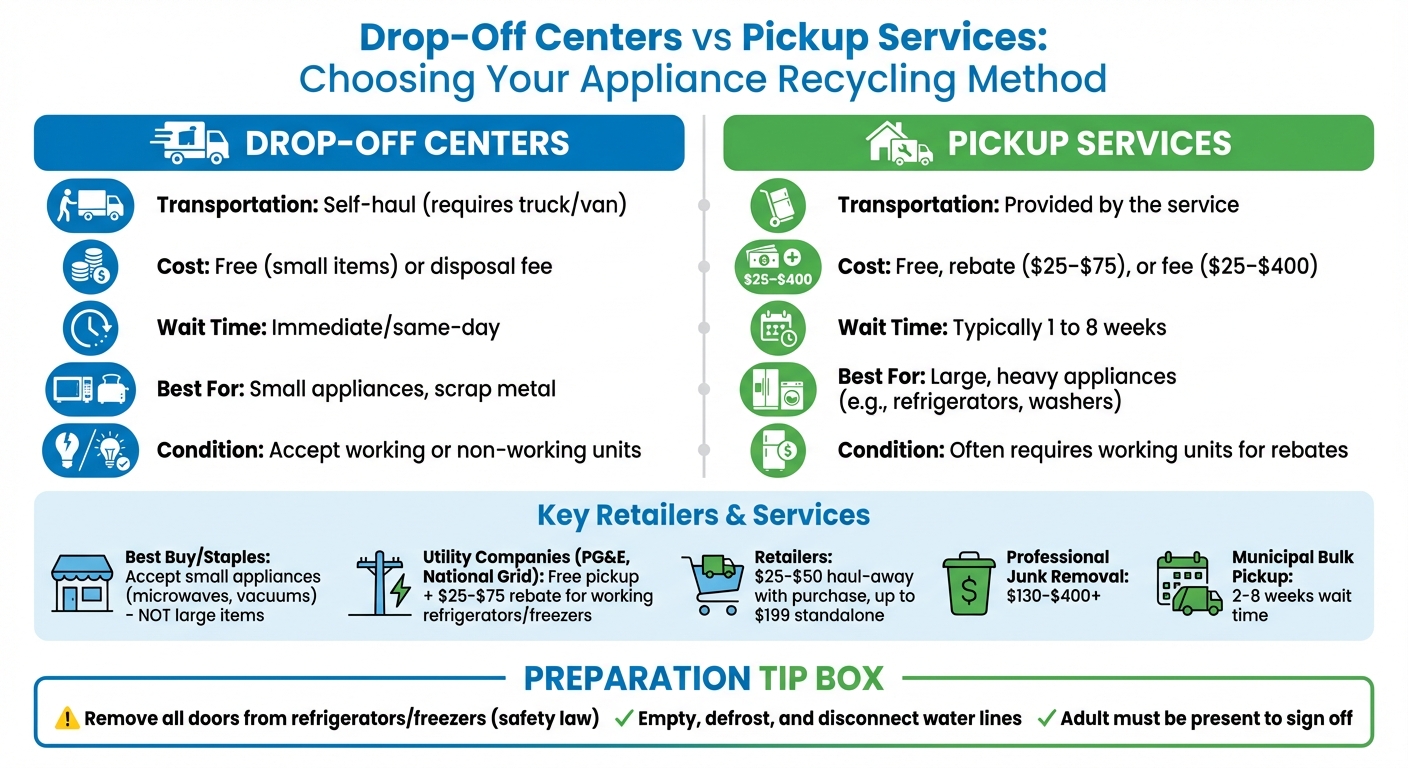
Appliance Recycling Drop-Off vs Pickup Services Comparison
Recycling appliances does more than reduce waste - it helps recover materials and prevents harmful substances from leaking into the environment.
Drop-Off Centers and Pickup Services
When it comes to recycling appliances, you have two main options: drop-off centers and pickup services.
Drop-off centers allow you to bring in your old appliances, but you’ll need a truck or van to handle the transport yourself. This option works well for smaller appliances or scrap metal, and you can often recycle items the same day. Some facilities accept items for free, while others may charge a disposal fee. Retailers like Best Buy or Staples usually take smaller appliances, such as microwaves or vacuum cleaners, but not larger items like refrigerators or washing machines.
Pickup services, on the other hand, take care of the heavy lifting and transportation for you. Many utility companies, such as PG&E or National Grid, offer free pickup services and might even give you a rebate ranging from $25 to $75 for functioning refrigerators or freezers. Retailers may also provide haul-away services when you purchase a new appliance, typically charging $25–$50, though standalone removal can cost up to $199. If you opt for municipal bulk pickup, keep in mind that it might take two to eight weeks. Professional junk removal services are faster but can range from $130 to over $400.
Before scheduling a pickup, make sure to prep your appliance. Remove all doors from refrigerators and freezers to comply with safety laws aimed at preventing child entrapment. Also, empty, defrost, and disconnect water lines, and ensure an adult is present to sign off on the removal. Proper preparation ensures the process goes smoothly at the recycling facility.
| Feature | Drop-Off Centers | Pickup Services |
|---|---|---|
| Transportation | Self-haul (requires truck/van) | Provided by the service |
| Cost | Free (small items) or disposal fee | Free, rebate ($25–$75), or fee ($25–$400) |
| Wait Time | Immediate/same-day | Typically 1 to 8 weeks |
| Best For | Small appliances, scrap metal | Large, heavy appliances (e.g., refrigerators, washers) |
| Condition | Accept working or non-working units | Often requires working units for rebates |
Once collected, the appliances head to specialized facilities for dismantling and recovery of reusable materials.
Dismantling and Material Recovery
At the recycling facility, appliances are carefully dismantled to recover useful materials and safely handle hazardous substances.
The process starts with decommissioning, where certified technicians recover refrigerants and remove hazardous components, as required by federal law. This step ensures that harmful substances like refrigerants, mercury, and used oil are managed responsibly.
After decommissioning, the appliances are sent through industrial shredders to break them into smaller pieces. Advanced machinery then separates the materials into categories such as ferrous metals, non-ferrous metals (like copper and aluminum), plastics, and glass. These materials are processed and repurposed: metals are melted down to create products like rebar or metal sheets, while plastics are turned into pellets (post-consumer resin) for use in new items. Glass is cleaned, sorted by color, and crushed for reuse in manufacturing.
Some programs go a step further by recovering polyurethane foam insulation, which contains gases that contribute to greenhouse effects. The EPA's Responsible Appliance Disposal (RAD) program focuses on safely handling these materials to minimize environmental harm.
"Federal law requires that: all refrigerant be recovered prior to dismantling or disposal... and universal waste (e.g., mercury), used oil, and PCBs be properly managed and stored." - US EPA
To put the impact into perspective, recycling 1,000 refrigerators through responsible programs prevents the release of greenhouse gases equivalent to 8,200 metric tons of CO₂. For example, Abt Electronics' recycling center in Glenview, Illinois, diverted over 22 million pounds of appliances from landfills in just one year.
Environmental and Energy Benefits
Recycling appliances plays a key role in preventing toxins from entering landfills and significantly reduces energy consumption during the production of new materials.
Keeping Appliances Out of Landfills
Each year, Americans discard approximately 5.3 million tons of major appliances, yet about 2.1 million tons - or 40% - still end up in landfills. When appliances rust in these sites, harmful substances like mercury, PCBs, and ozone-depleting refrigerants can seep into the soil and groundwater.
Recycling, on the other hand, ensures safe handling of these hazardous materials. For instance, recycling 25,000 refrigerators prevents carbon dioxide emissions equivalent to taking 50,000 cars off the road for a year. The EPA's Responsible Appliance Disposal (RAD) program has processed over 9 million units since 2006, avoiding emissions comparable to the annual energy use of 5 million homes.
Legislation is also driving change. By 2026, 22 U.S. states will have banned the disposal of major appliances in landfills, pushing for higher recycling rates and channeling more units toward certified recyclers and pickup services. Beyond reducing landfill waste, recycling these appliances offers substantial energy savings.
Energy Conservation Through Recycled Materials
Recycling materials from old appliances slashes energy consumption in manufacturing. For example, producing steel from recycled appliance scrap uses 74% less energy than making it from virgin iron ore. Similarly, creating aluminum from recycled materials requires 95% less energy than starting from raw resources. Steel from appliances already boasts an 88% recycling rate, making it one of the most recycled steel products.
Manufacturers are also stepping up. By 2022, Samsung reported that 31% of the plastic parts in its appliances contained recycled materials, with plans to expand recycled content to all plastic modules by 2030.
"An appliance's job isn't just to last longer - it's to leave less behind." - Danielle DeSiato, Managing Editor, Reviewed
Recycling not only reuses materials but also removes outdated, energy-hogging appliances from circulation. Those old refrigerators sitting in basements or garages often consume three times more electricity than modern units, costing up to $150 annually to operate. Retiring these inefficient models reduces energy demand, helping utilities avoid burning additional fossil fuels or constructing new power plants. In 2018 alone, recycling and composting municipal solid waste in the U.S. saved over 193 million metric tons of carbon dioxide equivalent.
Rica Recycling Appliance Services in the Bay Area
What Rica Recycling Offers
Rica Recycling plays a key role in promoting safe and responsible appliance recycling throughout the Bay Area. Located at 27105 Industrial Blvd, Hayward, CA 94582, the company follows a strict 100% landfill-free policy. They specialize in recycling appliances, electronics, and IT equipment. For residential customers, appliance recycling is offered as a drop-off service only at their Hayward facility, while pickup services are exclusively available for businesses dealing with e-waste and IT assets.
If you need to recycle Freon-containing items like refrigerators or air conditioners, Rica Recycling ensures these are handled in full compliance with California’s refrigerant removal standards. Recovered materials such as metals, plastics, and electronic components are sent to certified recycling partners for proper processing.
For business clients, Rica Recycling also provides certified data destruction and IT asset recovery services. Their facility operates Monday through Friday, from 8:00 AM to 4:00 PM, but it’s a good idea to call ahead to confirm their hours and the types of items they accept. By offering these services, Rica Recycling contributes to reducing landfill waste and conserving resources through proper recycling practices.
Pricing and Service Options
| Item Category | Examples | Service Method | Pricing |
|---|---|---|---|
| Major Appliances | Refrigerators, Freezers, Washers, Dryers, Stoves, Dishwashers, Air Conditioners | Drop-off Only | $50 per item |
| Small Appliances | Microwaves, Toasters, Vacuums, Fans, Coffee Makers | Drop-off | Free |
| Standard E-Waste | Computers, Laptops, Monitors, Cell Phones, Cables | Drop-off | Free |
| Large Projection TVs | Older rear-projection models | Drop-off | Fee Applies |
For major appliances like refrigerators and dryers, there’s a flat $50 drop-off fee. However, most small appliances - such as microwaves, toasters, and vacuums - are accepted free of charge. Standard e-waste, including computers, laptops, and cell phones, can also be dropped off at no cost. A separate fee applies for large projection TVs.
It’s important to note that Rica Recycling does not accept items like household batteries, light bulbs, hazardous waste (e.g., paint, motor oil, mercury), wood, tires, or media discs such as VHS tapes. Businesses managing large quantities of electronics can opt for fee-based pickup services tailored to their needs.
Conclusion
Recycling appliances isn't just about decluttering your home - it's about protecting the planet and conserving precious resources. For instance, improperly disposing of a refrigerator can release emissions equivalent to driving a car for 3,000 miles. With around 13 million refrigerated appliances discarded annually in the U.S., responsible recycling becomes a critical step in minimizing environmental harm.
"To reduce energy demand, ozone depletion, and global climate impacts, it is critical that older units be permanently removed from the energy grid and properly disposed of so that environmentally-harmful refrigerants and foam blowing agents are captured and recycled or destroyed." - U.S. Environmental Protection Agency (EPA)
For residents in the Bay Area, Rica Recycling provides a landfill-free solution at its Hayward facility, open Monday through Friday from 8:00 AM to 4:00 PM. They charge a flat $50 fee for major appliance drop-offs, while small appliances and standard e-waste are accepted at no cost. By recycling with Rica Recycling, you're helping to keep hazardous materials like refrigerants, mercury, and PCBs out of the environment. Plus, valuable materials like metals and plastics are recovered for reuse, aligning with the broader goal of sustainability. And if you're upgrading to an ENERGY STAR® model, you could save up to $50 annually on your electricity bill.
Take the first step today - visit Rica Recycling at 27105 Industrial Blvd, Hayward, CA 94582, or give them a call to confirm hours and accepted items. It's a simple action that makes a big difference for both your community and the environment.
FAQs
How do I know if my appliance has refrigerant or other hazardous parts?
To determine if your appliance contains refrigerants or hazardous components, consider whether it’s a household device like a refrigerator or an air conditioner. These appliances often include materials like refrigerants, used oil, mercury, or PCBs, which can be harmful to the environment if not disposed of correctly. Always take extra care when handling these items to ensure they are recycled safely and responsibly.
What’s the safest way to protect my data on smart appliances before recycling?
To keep your data safe, make sure to completely erase all personal information before recycling your device. Start by backing up any important files you want to keep. Then, perform a factory reset or use remote wiping tools if your device supports them. If you want to take it a step further, you can use professional data erasure services that provide certification for full data destruction. This added measure helps protect your privacy and reduces the chances of a data breach during the recycling process.
What should I bring and expect when dropping off appliances at Rica Recycling in Hayward?
When you're ready to recycle your appliances, make sure to bring items like small kitchen gadgets, office electronics, or larger household devices - depending on what's accepted. Many smaller appliances, such as coffee makers, fans, and toasters, can typically be dropped off free of charge. It's a good idea to check ahead of time to confirm if your specific items are eligible and to prepare them for quick and easy unloading. Rica Recycling takes care of the rest, ensuring they are disposed of safely and responsibly at their fully compliant facility.