
Data Erasure vs. Shredding: Eco Impact
When retiring old devices, businesses often choose between data erasure and shredding to protect sensitive information. While both methods ensure security, they differ greatly in their impact on the planet:
- Data Erasure: A software-based process that removes data while keeping hardware reusable. This reduces e-waste, avoids unnecessary manufacturing, and aligns with reuse-focused practices.
- Shredding: Physically destroys devices, rendering them unusable. Though secure, it consumes more energy, increases e-waste, and wastes valuable resources like rare metals.
Key Takeaways:
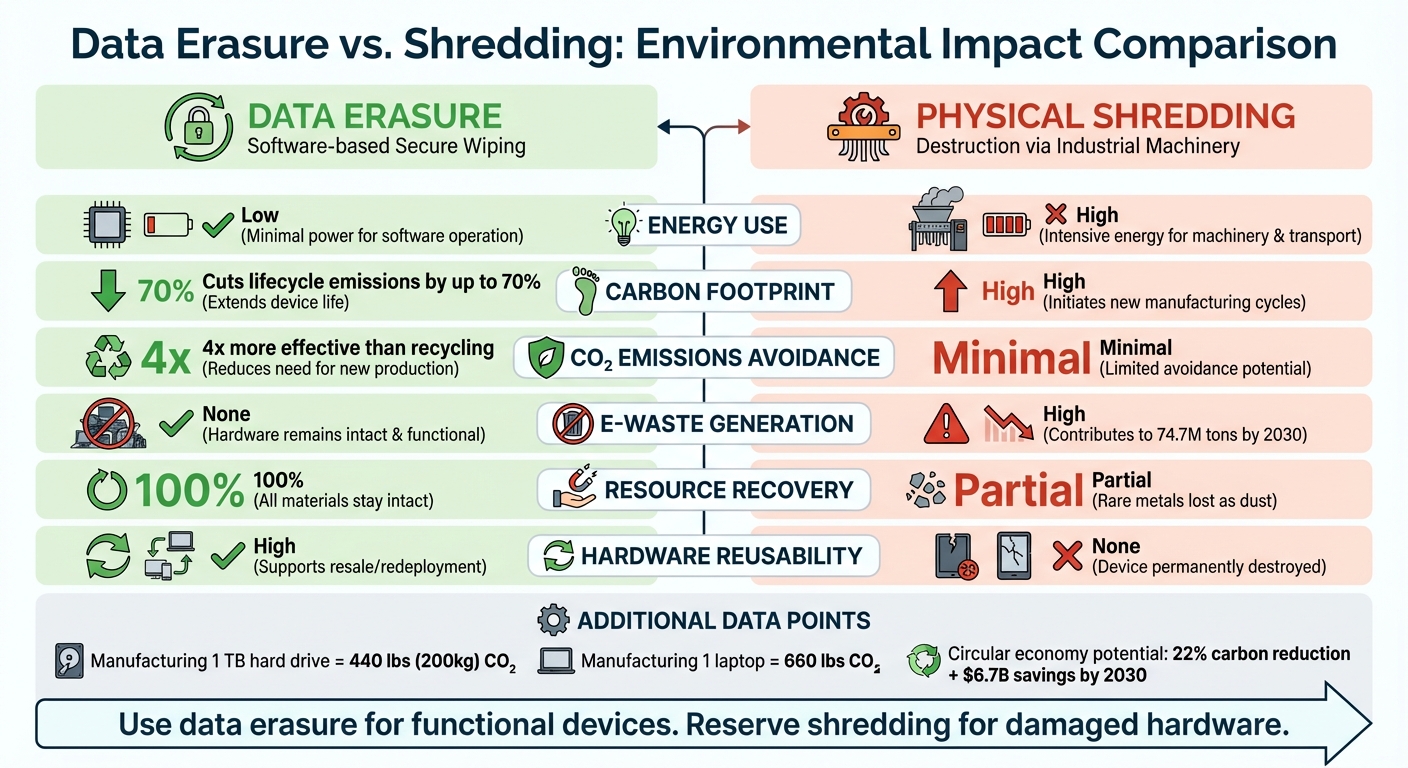
- Producing a single 1TB hard drive emits ~440 lbs of CO₂. Reusing devices after erasure avoids this entirely.
- Shredding adds to the growing e-waste crisis, expected to hit 74.7M tons by 2030.
- Data erasure supports reuse, cutting lifecycle emissions by up to 70%.
Quick Comparison:
| Metric | Data Erasure | Shredding |
|---|---|---|
| Energy Use | Low | High |
| CO₂ Emissions Avoidance | Up to 70% | Minimal |
| E-Waste Generation | None | High |
| Resource Recovery | 100% (materials intact) | Partial (metals lost) |
| Hardware Reusability | High | None |
Bottom Line: Use data erasure for functional devices to reduce waste and emissions. Reserve shredding for damaged or non-functional hardware.
Data Erasure vs Shredding Environmental Impact Comparison
Hard Drive Wiping vs. Shredding: Which Truly Keeps Your Data Safe? 🔐
sbb-itb-855056e
How Shredding Affects the Environment
Shredding, while often viewed as a secure method for data destruction, comes with environmental drawbacks that are hard to ignore. Unlike data erasure, which is resource-efficient, shredding consumes significant energy, contributes to e-waste, and wastes materials that could otherwise be reused.
Energy Use in Shredding
Industrial shredders require a lot of electricity to break down hard drives, servers, and other electronic devices. As Astralis Tech points out:
Shredding is energy intensive. Industrial shredders consume significant electricity, and transporting shredded material for downstream processing adds further carbon.
The destruction of functional hardware also triggers the need for replacements, adding to the environmental burden. Extracting raw materials for electronics production alone accounts for 40% of total carbon emissions during the manufacturing process. The Geneva Environment Network highlights this issue:
When the carbon dioxide released over a device's lifetime is considered, it predominantly occurs during production, before consumers buy a product.
This energy demand not only wastes resources but also contributes to the growing e-waste problem.
E-Waste and Landfill Problems
Shredding adds to the already massive and growing e-waste crisis. Global e-waste is expected to hit 74.7 million tons by 2030, and shredding functional devices unnecessarily increases this volume. The process produces hazardous byproducts like mercury, lead, and cadmium, which require careful handling to avoid polluting soil and water. Between 2014 and 2020, greenhouse gas emissions linked to electronics and e-waste rose by 53%. Shredding feeds into a "take-make-dispose" cycle that cuts short the potential lifespan of hardware, which could otherwise be securely erased and reused through IT asset recovery and data destruction services.
Lost Materials and Resources
Shredding also destroys the chance to recover valuable materials. Rare earth metals like cobalt and neodymium often end up as unrecoverable dust once devices are shredded. This represents a permanent loss of resources. For example, manufacturing a single laptop generates about 660 pounds of CO₂. When shredding destroys a working device, all the energy and resources used in its production are wasted.
Reusing devices, on the other hand, is far more efficient. A reused hard drive prevents four times more carbon dioxide emissions compared to shredding and recycling the components, even when using the most efficient recycling methods. Additionally, while recycled metals are 2 to 10 times more energy-efficient than metals made from virgin ore, keeping devices intact and operational is still the greener choice.
How Data Erasure Affects the Environment
Data erasure is a smart way to securely remove information from storage devices while keeping the hardware intact and usable. This software-based approach not only protects sensitive data but also offers notable environmental advantages. By reducing the need for new device production, it helps lower carbon emissions and promotes a more resource-efficient use of electronics.
Lower Energy Use
Unlike physical shredding, which involves energy-intensive industrial equipment, data erasure is a low-energy process. It relies on the device's own power to securely wipe data, eliminating the need for heavy machinery or transportation. To put this into perspective, manufacturing a single 1TB hard drive generates about 200kg of CO₂ equivalent. By reusing hardware through data erasure, this manufacturing impact is entirely avoided. The reduced energy demand and extended device life together make a meaningful contribution to cutting environmental impact.
Extending Hardware Life
Data erasure doesn’t just save energy - it also gives hardware a second chance. Securely wiped devices can be reused, resold, or donated, extending their lifespan by several years. This is critical because manufacturing a server accounts for roughly 50% of its total carbon footprint over a four-year period. Extending a device's life spreads out these emissions, significantly lowering its annual environmental impact. With each additional year of use, the carbon footprint per year decreases, making erasure a powerful tool for sustainability.
Supporting the Circular Economy
Data erasure plays a key role in advancing the circular economy, which focuses on keeping products in use for as long as possible. Instead of following the traditional "take-make-dispose" model (often involving e-waste pickup for disposal), erasure supports a "take-make-reuse" cycle. This shift conserves resources and reduces waste. In fact, adopting circular practices in the electronics industry could cut carbon emissions by 22% and save $6.7 billion annually in materials by 2030.
Fredrik Forslund, Vice President at Blancco, highlights the flaws in the common assumption that destruction is the only secure option:
Saying we have to shred because it's the only thing that's secure is a miscalculation... shredding [is] an absolute disaster.
Data erasure ensures devices retain their full value, preserving rare materials like neodymium and cobalt in their functional state rather than reducing them to unrecoverable waste. This approach not only protects the environment but also maximizes the utility of valuable resources.
Data Erasure vs. Shredding: Side-by-Side Comparison
When it comes to sustainability, data erasure takes the lead over physical shredding across every major metric. It’s a clear choice for reducing environmental impact.
Comparison Table
| Metric | Data Erasure | Physical Shredding |
|---|---|---|
| Energy Use | Low (relies on software) | High (requires industrial machinery) |
| Carbon Footprint | Cuts lifecycle emissions by up to 70% | High (initiates new manufacturing cycles) |
| E-Waste Generation | None (hardware remains intact) | High (produces scrap and hazardous waste) |
| Resource Recovery | 100% (materials stay in the device) | Partial (rare metals often lost as dust) |
| Hardware Reusability | High (supports resale and redeployment) | None (device is destroyed) |
| CO₂ Avoidance | 4x more effective than recycling | Less effective than reuse |
| Circular Economy Alignment | Strong (focuses on reuse) | Weak (follows a linear disposal model) |
The data paints a stark contrast. Data erasure not only conserves resources but also aligns with a reuse-first approach that minimizes waste and emissions. Julien Walzberg from the National Renewable Energy Laboratory (NREL) emphasizes this point:
Reusing a hard drive avoids four times as many carbon dioxide emissions as slicing it up and feeding the pieces through even the best imaginable recycling processes.
Even under ideal recycling conditions, shredding simply can’t compete with the environmental advantages of erasure.
When to Use Each Method
Deciding between erasing data and shredding devices depends on the condition of the hardware and specific regulatory requirements. Opt for data erasure when the device is still functional and meets compliance standards. Reserve shredding for situations where the hardware is damaged or inaccessible.
When Data Erasure Makes Sense
Data erasure is the go-to method for equipment that still works. Whether it's a laptop, server, or hard drive, certified data erasure allows the device to be reused, preserving its materials and reducing the environmental impact of manufacturing new hardware. This approach not only saves resources but also minimizes the carbon footprint associated with producing replacements.
For organizations prioritizing ESG (Environmental, Social, and Governance) goals, erasure aligns with sustainability efforts while adhering to NIST 800-88 security standards. It proves that protecting data and supporting the circular economy can go hand in hand. However, when hardware is no longer operational or fails to meet required standards, shredding becomes the only viable option.
When Shredding is Necessary
Physical destruction is essential in certain cases. For hardware that is damaged or non-functional, where data-wiping software cannot access the drives, shredding is the only way to ensure data is completely eliminated. Similarly, if a drive fails the erasure verification process, shredding guarantees that no sensitive information remains.
Regulatory requirements often dictate the use of shredding. Laws like GDPR, HIPAA, or PCI-DSS may mandate physical destruction for specific types of assets, regardless of whether the hardware is operational. The most effective strategy combines both methods: use data erasure for functional devices and rely on shredding for damaged equipment, failed erasure attempts, or highly sensitive media.
Rica Recycling's Eco-Friendly Data Destruction Services

For over two decades, Rica Recycling has been a trusted provider of certified electronics recycling and IT asset recovery services in the San Francisco Bay Area. Their mission combines data security with environmentally responsible practices, ensuring that both sensitive information and the planet are protected. By focusing on data erasure for reusable devices and reserving physical destruction for those beyond repair, Rica Recycling tackles the challenges of e-waste without compromising sustainability.
Certified Data Destruction
Rica Recycling uses a dual approach to data destruction. For reusable hardware, they rely on DoD-compliant software wiping, which involves a 7-pass overwrite process. Non-reusable devices, on the other hand, are physically shredded. To ensure transparency and compliance, every service includes a Certificate of Destruction issued within 48 hours, meeting GDPR, HIPAA, and PCI-DSS standards. For high-security projects, clients can also request photo or video documentation with a turnaround time of 1–3 business days.
100% Landfill-Free Operations
Rica Recycling operates under a strict 100% landfill-free policy, ensuring all e-waste is either recycled or repurposed. They work exclusively with EPA-registered and R2-certified processors to meet California and EPA regulations. This method not only minimizes waste from the shredding process but also promotes sustainable e-waste management. By prioritizing resource conservation, Rica Recycling demonstrates its dedication to reducing environmental harm.
"Rica Recycling has been a trusted business partner of ERC for over a decade. We handle the proper recycling of their CRT monitors and televisions. It's been amazing to see their growth over the past couple of years."
– Russ Schinzing, President of E-Recycling of California
Services for Local Organizations
Bay Area businesses, schools, and nonprofits in cities like Hayward, San Mateo, and Oakland benefit from Rica Recycling's convenient services. These include pickup and drop-off options for items like computers, laptops, servers, and appliances. Additionally, they handle bulk pickups for office decommissioning, which can involve tasks like server rack breakdowns and cable harvesting. Rica Recycling also organizes free community recycling events. By focusing on data erasure before shredding, they help extend the life of hardware, support the circular economy, and reduce overall procurement expenses for local organizations.
Conclusion: Choosing the Eco-Friendly Option
When it comes to managing old hardware, data erasure stands out as the environmentally conscious choice. It consumes less energy, extends the lifespan of devices, and supports the principles of a circular economy. For perspective, certified data wiping can cut lifecycle carbon emissions by up to 70% compared to shredding and recycling. Meanwhile, manufacturing just one new 1TB hard drive produces around 200 kg of CO₂ equivalent. While erasure is the best option for functional devices, there are situations where alternative methods are necessary.
Shredding plays a critical role for devices that are no longer operational, legacy storage media like tapes, or equipment that cannot pass sanitization verification. However, for working devices, certified data wiping should always be the priority. This approach not only delivers environmental advantages but also preserves the value of reusable assets.
Rica Recycling exemplifies this balanced approach. By emphasizing data erasure for reusable hardware and reserving shredding for devices that are beyond repair, they help Bay Area organizations reduce e-waste while ensuring sensitive data remains secure. Their commitment to a 100% landfill-free policy guarantees that every device is processed responsibly, whether wiped or destroyed.
This method allows businesses, schools, and nonprofits in areas like Hayward, San Mateo, and Oakland to shrink their carbon footprints while aligning with ESG goals. Opting for data erasure whenever possible not only protects sensitive information but also supports a greener future.
FAQs
Is data erasure as secure as shredding?
Data erasure and shredding both provide secure ways to dispose of data, but they take different approaches and have varying environmental effects. Certified data erasure, especially when done according to standards like NIST 800-88, ensures security while allowing devices to be reused. This reuse helps cut down on electronic waste. On the other hand, shredding ensures security by physically destroying devices, but it creates more waste and has a greater environmental footprint. When done correctly, data erasure serves as a secure and environmentally friendly option.
How do I know if a device can be erased or must be shredded?
When deciding between erasing or shredding a device, it boils down to its condition, potential value, and how critical data security is in your situation.
- Erase: If the device is still functional and might be reused or sold, wiping its data using secure software is the way to go. This ensures data is removed while keeping the device intact for future use.
- Shred: For broken or non-functional devices - or when you need absolute certainty that data cannot be recovered - shredding is the safer option. This physically destroys the device, leaving no chance for data retrieval.
Take a moment to evaluate the device’s condition and your security needs to determine the most suitable method.
What proof do I get that my data was destroyed?
When your data is securely erased or physically destroyed, you’ll receive a certificate of destruction or detailed documentation. This serves as proof that your sensitive information was handled responsibly, offering reassurance and transparency throughout the process.