
How E-Waste Recycling Impacts Water Pollution
The problems of electronic waste, such as discarded phones, computers, and batteries, contribute significantly to water pollution. Improper disposal releases harmful chemicals, such as lead, mercury, and cadmium, into groundwater, rivers, and lakes. In 2022, only 22.3% of the 62 million tons of global e-waste was recycled properly, leaving the rest to contaminate water supplies. Toxic substances from e-waste leach into water systems through landfill runoff, rainwater, and informal recycling practices like burning. This pollution harms ecosystems, poisons aquatic life, and poses severe health risks, including neurological damage and developmental issues in humans.
Key Points:
- E-waste contributes to 70% of heavy metals in landfill leachate.
- Burning e-waste releases airborne toxins that settle into water.
- Certified recycling programs, like R2 and e-Stewards, prevent water contamination by safely handling hazardous materials.
- Companies like Rica Recycling follow a 100% landfill-free policy, ensuring toxic substances are kept out of water systems.
Proper e-waste recycling is critical to protecting water resources and public health. Always choose certified recyclers to reduce pollution risks.
What Are The Environmental Impacts Of Improper E-waste Disposal? - Earth Science Answers
sbb-itb-855056e
How Poor E-Waste Management Causes Water Contamination
Improper disposal of electronics creates direct routes for harmful substances to infiltrate water systems. In landfills and informal recycling sites, both physical and chemical processes allow toxic materials to seep into surface water and underground aquifers.
Toxic Chemicals Leaching into Groundwater
Landfills often set the stage for toxic chemicals to escape into groundwater. When electronics are dumped and compacted, their casings crack, and batteries rupture, exposing hazardous materials to moisture and heat. This accelerates the breakdown of chemicals, making them more likely to leach into the environment.
As rainwater seeps through layers of waste, it dissolves heavy metals and other toxins, forming a harmful liquid called leachate. This contaminated runoff seeps through porous soil, eventually reaching aquifers that provide water for wells and municipal systems.
"When electronic devices are not properly disposed, these substances can seep into soil and eventually find their way to groundwater resources just like other pollutants",
explains Veena Clay.
The problem is worsened by infrastructure limitations. Most landfill liners are designed for organic waste, not the corrosive heavy metals found in electronics.
"Landfill liners degrade over time, and leachate systems only react after contamination occurs - they don't prevent it",
notes Cooper Kelly.
To make matters worse, standard water treatment facilities are not equipped to filter out all the heavy metals and complex chemicals found in e-waste leachate. As a result, residual pollutants often make their way into drinking water supplies.
In addition to leachate, rain and burning create other ways for toxins to spread.
Rainwater Runoff and Airborne Contamination
While leachate contaminates groundwater, surface processes also contribute to pollution. Heavy rains can wash toxins from open dumpsites into nearby rivers, lakes, and streams.
Burning e-waste adds another layer of risk. In areas with poor waste management, electronics are often burned to recover valuable metals like copper and gold. Landfill fires, often caused by crushed lithium-ion batteries undergoing thermal runaway, also release harmful substances into the environment.
"Burning e-waste, a practice used in some regions to recover metals, can release toxic ash and gases. If the byproducts are not managed properly, they can contaminate nearby waterbodies through runoff or atmospheric deposition",
warns Paul Ploumis.
For example, burning PVC-coated cables emits dangerous dioxins and furans into the air. These pollutants eventually settle into water systems through rainfall and ash. Even worse, airborne toxins can travel far from the burning site, contaminating water supplies miles away.
Harmful Chemicals in E-Waste and Their Effects on Water
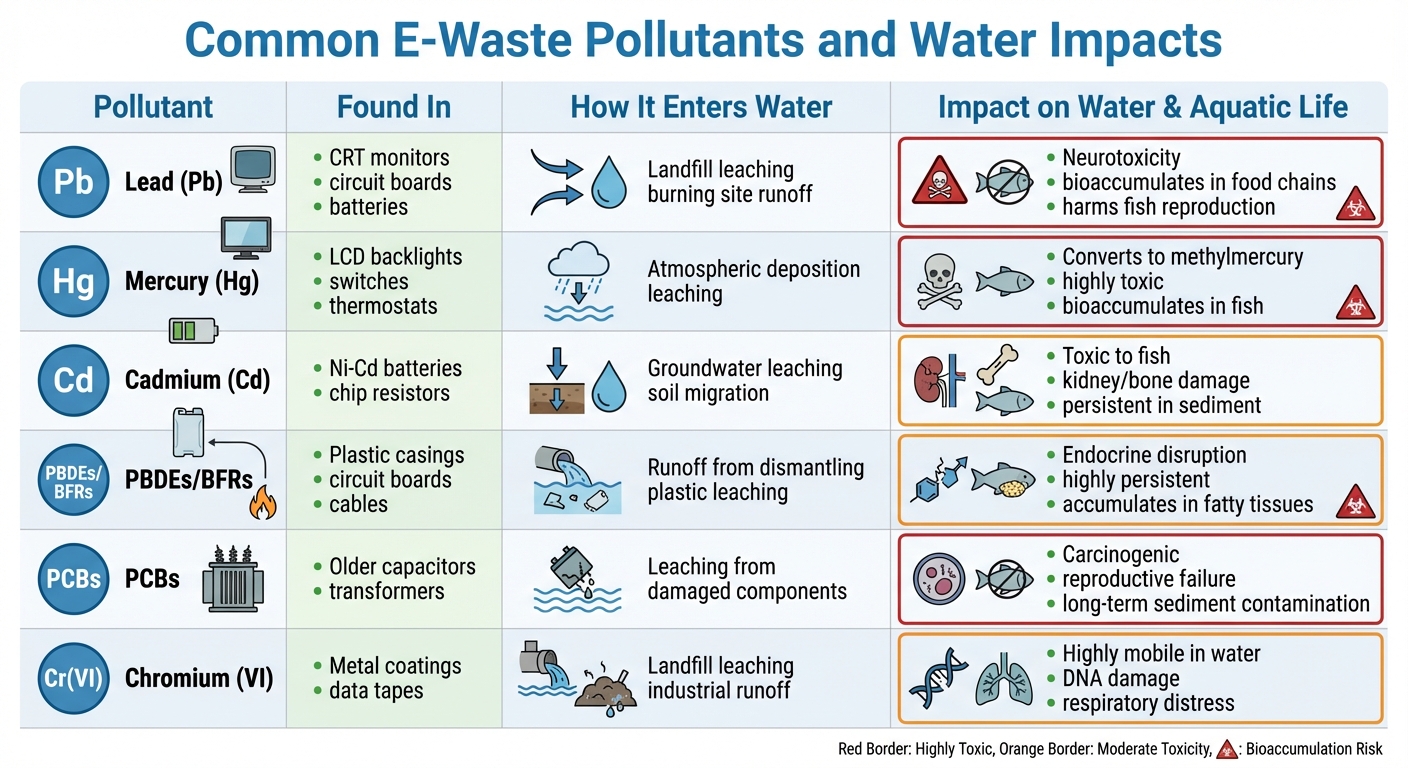
Common E-Waste Pollutants and Their Impact on Water Systems
Heavy Metals and Persistent Organic Pollutants
E-waste, made up of about 60% metals and 15% plastics, becomes a major environmental hazard when improperly disposed of. As these materials break down in landfills or informal recycling sites, they release toxic substances that linger in the environment indefinitely. Heavy metals like lead, mercury, and cadmium are particularly concerning because they accumulate in sediment and work their way up the food chain.
To put this into perspective, an estimated 500 million obsolete PCs contain around 718,000 tonnes of lead, 1,363 tonnes of cadmium, and 287 tonnes of mercury. These metals enter water systems through landfill leachate, rainwater runoff, and even atmospheric deposition, creating long-term pollution challenges.
Another group of harmful substances from e-waste includes flame retardants such as polybrominated diphenyl ethers (PBDEs) and polychlorinated biphenyls (PCBs). These are classified as persistent organic pollutants because they resist natural breakdown and accumulate in the fatty tissues of aquatic life. For example, studies at the Agbogbloshie e-waste site in Accra, Ghana, found PBDE concentrations in surface soils ranging from 6.3 to 7,700 ng/g, far exceeding levels typically found at standard waste sites.
"E-waste is made up of different hazardous substances such as heavy metals and persistent organic pollutants with the capacity to contaminate the environment if processed or recycled inappropriately",
according to the Journal of Environmental Health Science and Engineering.
While older flame retardants like PBDEs are being phased out, newer chemicals such as organophosphate esters are now appearing in water systems, adding to the growing list of contaminants.
Table: Common E-Waste Pollutants and Water Impacts
The table below highlights some of the most common pollutants from e-waste, their sources, and their effects on water and aquatic ecosystems.
| Pollutant | Common Electronics | Entry Method to Water | Water & Aquatic Impact |
|---|---|---|---|
| Lead (Pb) | CRT monitors, circuit board solder, lead-acid batteries | Leaching from landfills; runoff from burning sites | Neurotoxicity; bioaccumulates in aquatic food chains; harmful to fish reproduction |
| Mercury (Hg) | LCD backlights, tilt switches, thermostats | Atmospheric deposition after burning; leaching | Converts to methylmercury in water; highly toxic to aquatic life; bioaccumulates in fish |
| Cadmium (Cd) | Ni-Cd batteries, chip resistors, infrared detectors | Leaching into groundwater; soil-to-water migration | Highly toxic to fish; causes kidney and bone damage in organisms; persistent in sediment |
| PBDEs / BFRs | Plastic casings, circuit boards, cables | Runoff from dismantling sites; leaching from plastics | Endocrine disruption in aquatic species; highly persistent; accumulates in fatty tissues |
| PCBs | Older capacitors, transformers, voltage regulators | Leaching from damaged components; runoff | Carcinogenic; causes reproductive failure in aquatic wildlife; long-term sediment contamination |
| Chromium (VI) | Metal coatings (anti-corrosion), data tapes | Leaching from landfills; industrial runoff | Highly mobile in water; causes DNA damage and respiratory distress in aquatic organisms |
Health and Environmental Damage from E-Waste Water Pollution
Human Health Risks
When e-waste pollutants contaminate drinking water, they can lead to severe, long-term health problems. Heavy metals like lead and mercury are particularly harmful, potentially causing neurological damage, developmental delays, kidney and liver dysfunction, and cardiovascular issues. Persistent organic pollutants found in e-waste act as endocrine disruptors, interfering with hormone systems and leading to reproductive and developmental disorders. Children and pregnant women face the highest risks. Additionally, individuals living or working near informal e-waste recycling sites are more likely to experience DNA damage and hormonal imbalances due to prolonged exposure.
"When the amount of toxic metals such as lead (Pb), mercury (Hg), arsenic (As), cadmium (Cd), selenium (Se), and chromium (Cr) exceeds the permissible level in the environment, it may pose risk and hazards to the human and the ecosystem."
- M. Qamruzzaman et al.
These health risks are closely tied to the damage e-waste causes to aquatic ecosystems, which further amplifies the problem.
Damage to Aquatic Ecosystems
E-waste water pollution doesn't just harm humans - it wreaks havoc on aquatic ecosystems. A 2022 study in Lagos found cadmium and lead levels in e-waste leachate (0.4 mg/L and 0.2 mg/L, respectively) far exceeding US EPA safety limits. Such contamination has devastating effects. For instance, Atlantic Killifish embryos exposed to leachate concentrations as low as 0.0001% showed reduced body and head growth, craniofacial deformities, and spinal abnormalities. These pollutants also cause muscular and neurological degeneration, organ damage, and increased fish mortality while stunting aquatic plant growth and impairing reproduction.
The problem doesn’t stop there. These toxins accumulate in the aquatic food chain, meaning contaminated fish and seafood can bring these harmful substances back to humans.
"E-waste leachate arising from indiscriminate dumping into aquatic ecosystems in Nigeria contains mixtures of toxic constituents that can threaten ecosystem and public health."
- Juliet Kelechi Igbo, Department of Biological Oceanography, Nigeria Institute for Oceanography and Marine Research
In extreme cases, unchecked e-waste pollution has led to the collapse of entire river ecosystems. Adding to the concern, liquid crystal monomers from discarded LCD screens can persist in water for up to 1,600 days. These substances may even be metabolized by wildlife into carcinogenic compounds that spread far beyond their original source.
How to Prevent Water Pollution from E-Waste
Benefits of Certified E-Waste Recycling
One of the most effective ways to stop e-waste from polluting water is by using certified recyclers that follow strict environmental guidelines. Programs like R2 (Responsible Recycling) and e-Stewards ensure that hazardous materials - like those containing PCBs, mercury, and lead - are handled in controlled facilities rather than being dumped or sent abroad. These certified recyclers operate under EPA and state regulations, preventing toxic substances from seeping into soil and groundwater. In contrast, informal recycling methods, such as open burning or acid stripping, often lead to severe contamination.
Unfortunately, global e-waste production is outpacing proper recycling efforts. A significant portion - up to 70–80% - of e-waste sent to uncertified recyclers ends up in developing countries. There, unsafe processing practices can cause groundwater contamination levels to exceed national safety standards by 1.3 to 140 times.
To ensure responsible disposal, always check a recycler’s certifications. Databases for e-Stewards and R2 facilities make it easy to confirm whether a recycler meets these standards. Both certifications prohibit exporting hazardous waste to developing countries and enforce responsible processing to avoid illegal dumping. A high-profile example of the consequences of improper disposal occurred in May 2015, when AT&T was fined millions by the EPA for dumping e-waste into landfills and uncertified areas, highlighting the serious risks of neglecting proper recycling.
Why Landfill-Free Recycling Matters
Certified recycling is essential, but avoiding landfill disposal altogether takes water pollution prevention a step further. Landfills are not designed to safely contain heavy metals or battery chemicals for extended periods. Over time, their plastic liners degrade, turning them into a ticking time bomb for water contamination.
"Landfills were designed for household trash and organic waste, not electronics. They are not engineered to safely contain heavy metals, battery chemicals, or electronic components over decades."
- Cooper Kelly
Even advanced water treatment systems can’t filter out all toxins, meaning pollutants from landfills can still make their way into rivers, lakes, and other water sources. Adopting a 100% landfill-free policy helps prevent devices from breaking down in ways that expose sensitive components to moisture and stress. This approach also addresses the dangers of lithium-ion batteries, which can ignite underground fires when crushed in landfills. These fires release toxic gases that harm both soil and water systems.
To further minimize risks, businesses and organizations should separate batteries from devices before recycling and avoid accumulating old electronics. Recycling devices immediately after upgrades reduces the chance of improper disposal and prevents battery degradation. For companies managing large IT inventories, opting for refurbished equipment through IT asset recovery programs is another smart move. This practice can cut lifecycle emissions by 50–70% compared to buying new equipment.
How Rica Recycling Prevents Water Pollution
Certified Recycling and Secure Data Destruction
With two decades of experience, Rica Recycling partners with EPA-registered, R2-certified processors to ensure electronics are handled responsibly, keeping harmful toxins from polluting water sources. At their Hayward facility, devices like computers, servers, monitors, and cell phones are processed under strict environmental guidelines to prevent toxic materials from entering groundwater and aquatic ecosystems.
Before recycling begins, storage drives are either securely wiped following NIST 800-88 standards or physically destroyed. This dual approach ensures data security while supporting safe material recovery. Russ Schinzing, President of E-Recycling of California, highlights their long-standing partnership:
"Rica Recycling has been a trusted business partner of ERC for over a decade. We handle the proper recycling of their CRT monitors and televisions. It's been amazing to see their growth over the past couple of years."
100% Landfill-Free Operations
Rica Recycling's commitment to water protection is further reinforced by their 100% landfill-free policy. This means no devices are left to decompose in landfills, where heavy metals and toxins could seep into groundwater. Instead, all materials are routed through certified processors, who recover valuable components like steel, aluminum, copper, plastic, and glass to be repurposed into new products. By diverting e-waste from landfills, the company significantly reduces the risk of water contamination from hazardous substances. These efforts play a direct role in preserving water quality and preventing toxic chemicals from entering local waterways.
Services for Businesses and Organizations
Rica Recycling also supports businesses, schools, and organizations across the Bay Area by offering convenient pickup and drop-off options. Companies can schedule bulk pickups, while smaller loads can be dropped off at the Hayward facility during free drop-off events. The company accepts a wide variety of electronics - including computers, servers, monitors, printers, cell phones, and cables - at no cost for most items.
Through their IT asset recovery program, Rica Recycling extends the life of functional electronics by refurbishing them for resale. This approach not only reduces waste but also promotes a more sustainable use of resources.
Conclusion: Protecting Water Through Proper E-Waste Disposal
When e-waste ends up in landfills, it releases harmful chemicals like lead, mercury, and cadmium into nearby water sources. This global issue highlights the pressing need for responsible disposal methods.
Certified recycling offers a solution by containing hazardous materials in controlled environments, preventing them from contaminating water. As Cooper Kelly of EACR Inc. aptly states:
"What happens in a landfill doesn't stay in a landfill".
By diverting electronics away from landfills, certified recyclers stop toxic substances from seeping into groundwater.
Companies like Rica Recycling are at the forefront of this effort. Their 100% landfill-free process ensures that all devices are managed according to strict environmental guidelines. By collaborating with EPA-registered, R2-certified processors, they ensure hazardous components are safely handled while valuable materials are reclaimed. This process not only prevents water pollution but also reduces the need for energy-intensive mining, which is another major environmental concern.
For businesses and organizations, choosing certified e-waste recycling is a straightforward way to protect water quality. Bay Area businesses, for instance, play a key role in safeguarding local water sources by opting for certified recycling services. Whether through scheduled pickups or free drop-off events, proper e-waste disposal keeps toxic chemicals out of groundwater and helps maintain healthy aquatic ecosystems for future generations. Make the choice to recycle responsibly and protect our vital water resources.
FAQs
How does e-waste end up in drinking water?
E-waste poses a serious threat to drinking water when harmful chemicals like lead, mercury, and cadmium seep out of improperly discarded electronics. These toxic substances can leach into the soil and, with the help of rainwater, make their way into groundwater or nearby rivers and lakes, spreading contamination far and wide. To protect water sources and reduce this risk, proper recycling and responsible disposal of electronics are absolutely necessary.
Can home water filters remove heavy metals from e-waste?
Home water filters can help reduce heavy metals in your water, but their effectiveness varies depending on the type of filter and the specific metals involved. Filters such as reverse osmosis, activated carbon, and ion exchange are particularly effective at reducing contaminants like lead, mercury, and cadmium. However, not all filters are designed to target heavy metals. To ensure your water is safe - especially in areas affected by e-waste contamination - it's crucial to use a certified system and keep it properly maintained.
How can I verify a recycler is truly certified and landfill-free?
To ensure a recycler is certified and operates without relying on landfills, look for certifications such as the Responsible Recycling (R2) Standard or the e-Stewards® Standard. These certifications are backed by independent audits, giving you confidence in their practices. Be wary of misleading claims like "EPA certified", as the EPA does not certify recyclers. Always request documentation of their landfill-free policy and ask for their most recent audit reports to confirm they meet strict environmental standards.