
Top 7 Hazardous Materials Found in E-Waste
The problems of electronic waste stem from harmful substances that pose serious risks to health and the planet. Improper disposal can release toxins into soil, water, and air. Here's a quick look at the top hazardous materials in electronics and their dangers:
- Lead: Found in CRTs, solder, and batteries. Causes neurological damage, especially in children.
- Mercury: Present in LCD backlights and switches. Leads to nervous system damage and bioaccumulates in fish.
- Cadmium: Found in batteries and circuit boards. Linked to cancer and kidney damage.
- Chromium VI: Used in corrosion-resistant coatings. Causes cancer and groundwater contamination.
- Brominated Flame Retardants (BFRs): Found in plastics and circuit boards. Releases toxic dioxins when burned.
- Polychlorinated Biphenyls (PCBs): Used in older electronics. A known carcinogen that persists in the environment.
- Polyvinyl Chloride (PVC): Common in cables and casings. Releases toxic gases when burned.
Key Facts:
- E-waste contributes 40-70% of heavy metals in landfills.
- Only 22.3% of global e-waste was recycled in 2022.
- Toxins like lead and mercury can contaminate food chains and harm vulnerable populations.
Proper recycling through certified facilities is essential to prevent long-term harm and recover valuable materials. Avoid breaking or burning electronics, and choose responsible disposal methods to protect health and ecosystems.
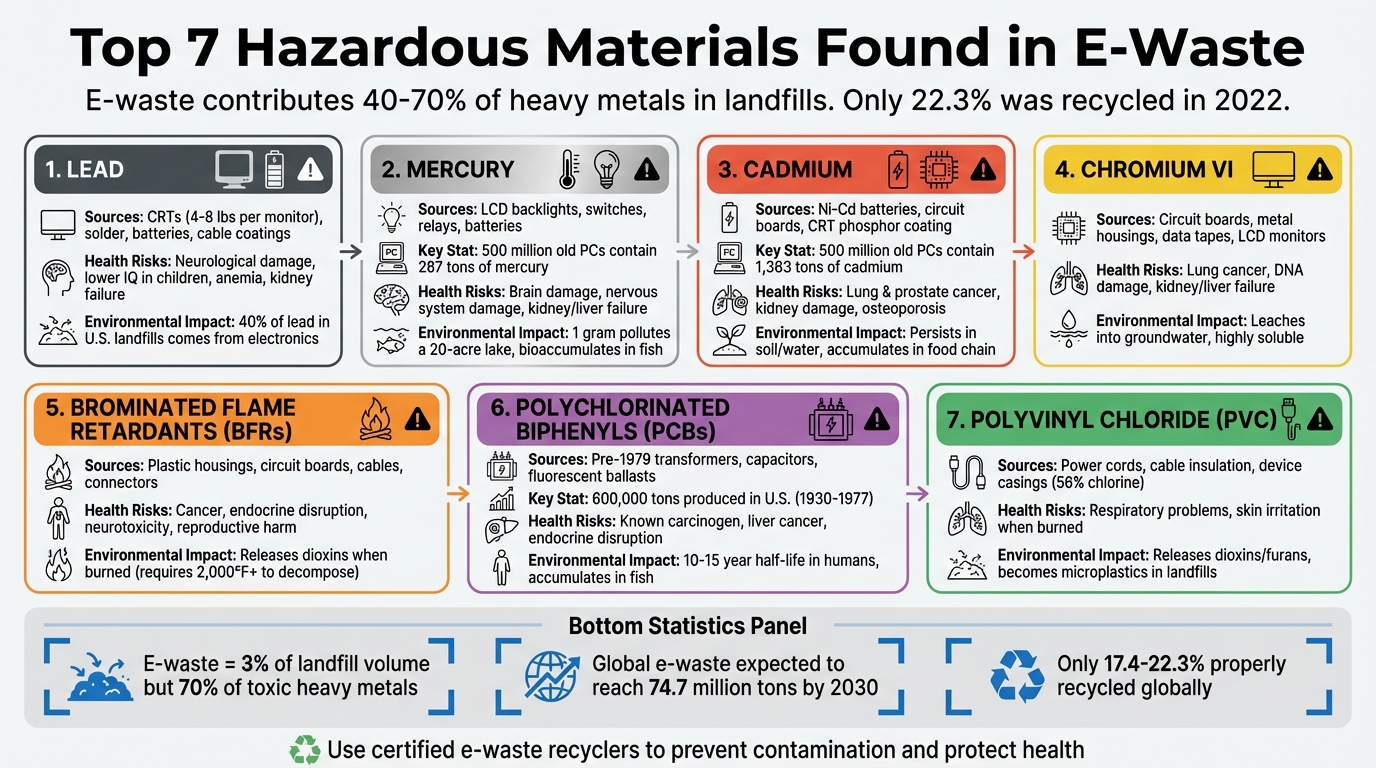
7 Hazardous Materials in E-Waste: Sources, Health Risks, and Environmental Impact
1. Lead
Source in Electronics
Lead is one of the most common hazardous materials found in electronics. It’s especially prevalent in the glass of CRTs (cathode ray tubes) used in older TVs and monitors. A single 15-inch CRT can contain anywhere from 4 to 8 pounds of lead. Beyond CRTs, lead is also present in circuit board solder, lead-acid batteries, and cable coatings. Even modern devices, like mobile phones, contain small amounts of lead - about 0.3% by weight. According to EPA testing, 12 widely used electronic items, including computer CPUs, printers, and cell phones, were found to leach lead at levels exceeding the hazardous waste threshold of 5 mg/L. These sources not only threaten the longevity of devices but also create serious safety concerns.
Health Impacts
Exposure to lead from electronic waste can cause severe health problems, particularly for children and pregnant women. Lead crosses the placenta and contaminates breastmilk, making it especially dangerous for unborn and nursing infants. In children, lead exposure can result in permanent neurological damage, lower IQ, and long-term behavioral problems. Adults are also at risk, facing conditions like anemia, kidney failure, nerve damage, and even brain damage.
"Lead ingestion also causes severely detrimental side effects such as irreversible neurological disorders in infants and toddlers which can continue into adulthood." - ERI
In Guiyu, China, a well-known hub for informal e-waste recycling, studies have revealed alarmingly high blood lead levels in children. These elevated levels are linked to neurological impairments and respiratory problems caused by practices like manual dismantling and open burning of electronic waste.
Environmental Impacts
Improper disposal of electronics allows lead to seep into the environment. In landfills, lead leaches into the soil and groundwater, contaminating water supplies over large areas. In fact, discarded electronics contribute about 40% of the total lead content in U.S. landfills. Informal recycling practices, such as burning or heating electronics to extract valuable metals, release toxic lead fumes and dust into the air. These pollutants can travel far, spreading contamination over wide regions.
Disposal Challenges
Safely processing lead-containing components is both expensive and complicated. CRTs, for example, require specialized handling to prevent the release of hazardous lead dust. Many electronic devices also feature tightly integrated components, making them difficult to disassemble without advanced equipment. Adding to the problem, weak recycling regulations in the U.S. mean that many devices are processed without proper oversight. This has led to low recycling rates and illegal exports to countries with less stringent environmental protections. While at least 20 states have introduced landfill bans on electronics to reduce contamination risks, enforcement is inconsistent. These obstacles highlight the urgent need for professional electronics waste pick-up services.
sbb-itb-855056e
2. Mercury
Source in Electronics
Mercury finds its way into a surprising number of electronic devices. Older LCD screens in laptops, flat-panel TVs, and monitors often used CCFL backlighting, which contains mercury. It’s also present in switches and relays, including laptop screen shutoffs and pre-1991 "tilt" switches. Some vehicles manufactured before 2003 even feature mercury switches. Other sources include certain lamps, batteries, and older thermostats and thermometers. To put this into perspective, approximately 500 million obsolete personal computers collectively hold an estimated 287 tons of mercury. These widespread uses make mercury a significant contributor to potential exposure risks.
Health Impacts
Mercury exposure can wreak havoc on the human body. Inhaling mercury vapor can lead to brain swelling, cognitive impairment, permanent nervous system damage, tremors, memory issues, trouble concentrating, and even personality changes. Prolonged exposure can also harm the kidneys, cause liver failure, and severely damage the lungs.
A recent example highlights these risks. In April 2023, the National Institute for Occupational Safety and Health (NIOSH) examined an electronics waste and lamp recycling facility in Ohio. The study revealed that 6 out of 14 workers had urine mercury levels exceeding safety limits. Workers in the lamp recycling area showed a median ratio of 41.3 μg/g - over twice the safe threshold of 20.0 μg/g. Air samples from the material storage area reached 60.5 μg/m³, surpassing NIOSH’s recommended limit of 50 μg/m³. Some workers reported symptoms like a metallic taste in their mouths and trouble thinking clearly.
Environmental Impacts
The environmental effects of mercury are just as alarming. When electronics containing mercury end up in landfills, the toxic metal can seep into the soil and groundwater, potentially contaminating drinking water supplies. Mercury also bioaccumulates in fish and wildlife, entering the food chain and creating long-term ecological risks. Shockingly, just 1 gram of mercury is enough to pollute a 20-acre lake.
"Recycling mercury-containing products is one of the best ways to help prevent mercury releases to the environment by keeping these products out of landfills and incinerators." - US EPA
Improper disposal methods, such as incineration, release mercury vapor into the air. Even physical damage, like crushing during transport, can immediately release hazardous mercury dust and vapors. Since mercury doesn’t naturally break down, it remains a persistent environmental pollutant.
Disposal Challenges
Disposing of mercury-containing electronics requires extreme care. Items like fluorescent bulbs and tubes are particularly fragile - breaking them releases toxic vapors instantly. To address these dangers, states like California and Vermont prohibit mercury-containing electronics from being thrown out with regular household trash. Instead, they must be handled as hazardous waste. Despite these regulations, a large amount of mercury-laden e-waste is illegally shipped to developing countries, where it’s processed without proper safety measures.
In the U.S., mercury-containing devices are classified as "Universal Waste", simplifying their transport for recycling. However, they should never end up in regular landfills. With the country generating up to 50 million tons of e-waste annually, only 20% to 25% is currently recycled. Mercury, like other harmful e-waste components, demands careful handling to safeguard both human health and the environment.
3. Cadmium
Source in Electronics
Cadmium, like mercury, is a serious environmental and health concern due to its extensive use in electronics and its persistence in nature. It is most commonly found in rechargeable nickel-cadmium (Ni-Cd) batteries, but it also shows up in circuit boards, printer inks, toners, and the phosphor coating inside older cathode-ray tube (CRT) screens. Additionally, manufacturers use cadmium to stabilize plastics and pigments in electronic casings. To put this into perspective, around 500 million outdated personal computers are estimated to contain a staggering 1,363 tons of cadmium. The U.S. Environmental Protection Agency lists cadmium as one of the eight most harmful metals to the environment.
Health Impacts
The health risks associated with cadmium are severe. It is classified as a human carcinogen and has been linked to lung and prostate cancers. Prolonged exposure can cause irreversible damage to the kidneys, lungs, and bone marrow, increasing the risk of conditions like osteoporosis and pulmonary emphysema. What makes cadmium particularly dangerous is its long half-life, which allows even minor exposures to accumulate over time.
"The big problem with cadmium is its long half-life, meaning even a small amount of exposure could have long-lasting effects in the human body." - Rachelle Gordon, ERI
Acute exposure can lead to flu-like symptoms, muscle pain, and chills. But the problem doesn’t stop with human health; cadmium's resilience also causes significant damage to the environment.
Environmental Impacts
When disposed of in landfills, cadmium can seep into soil and groundwater, especially in acidic conditions. It persists in the environment, accumulating in the food chain as it moves from contaminated soil and water into plants, animals, and eventually human food supplies. Aquatic ecosystems are particularly vulnerable, as cadmium is highly toxic to marine life. It also hinders plant growth. Adding to the problem, global e-waste is increasing by nearly 2 metric tons annually, with projections indicating production could reach 74.7 million tons by 2030 - a 50% jump from current levels.
Disposal Challenges
Managing cadmium-containing electronics responsibly is critical. During recycling, cadmium is often released when components are crushed, shredded, or when devices corrode or sustain damage. Alarmingly, only 17.4% of global e-waste was properly recycled in 2019, leaving a vast amount of cadmium to contaminate the environment. In response, California has implemented strict limits on cadmium in electronics under its Restrictions on the use of Hazardous Substances (RoHS) regulations. In some areas, activities like smashing electronics in "rage rooms" are prohibited because they release toxic cadmium dust into the air. Without careful handling and disposal, cadmium in e-waste remains a significant threat to both human health and the planet.
4. Chromium VI
Source in Electronics
Hexavalent chromium plays a critical role in electronics, acting as a corrosion inhibitor in items like printed circuit boards, metal housings, chassis, and even magnetic storage media such as data tapes and floppy disks. It is also used in electroplating, specialized circuit board inks, and certain components of LCD monitors. However, during manufacturing, safer forms of chromium can convert into the toxic hexavalent state, posing serious risks. Its widespread use in these applications significantly contributes to health and environmental concerns.
Health Impacts
Chromium VI is classified as a human carcinogen and is linked to several severe health issues, including lung cancer, DNA damage, kidney and liver failure, permanent eye injuries, and painful skin ulcerations known as "chrome ulcers." Alarmingly, these effects can occur even with minimal exposure. The median lethal dose is estimated to range between 50 and 150 mg/kg, and the World Health Organization has set a strict limit of 0.05 milligrams per liter for chromium in drinking water.
"Chromium hexavalent even at low concentrations is highly toxic and extremely harmful to all living things, it is known as the invisible toxin of e-Waste." - Andrew Morton, Cleanlites
Its ability to move easily through the environment only increases the risks of contamination and exposure.
Environmental Impacts
Chromium VI's solubility allows it to leach quickly from landfills into groundwater, contaminating drinking water and threatening aquatic ecosystems and plant life. The EPA identifies it as one of the eight most hazardous metals to the environment. A striking example of its environmental damage occurred in 1993, when Pacific Gas and Electric Company discharged over 370 million gallons of wastewater containing hexavalent chromium into the Mojave Desert. This contamination led to widespread illness in Hinkley, California, and cleanup efforts lasted until May 2017. Such incidents highlight the long-term dangers posed by this toxin.
Disposal Challenges
In California, Chromium VI is regulated under the Universal Waste law, with businesses facing penalties of up to $70,000 per day for improper disposal of items like LCD monitors. Its presence in various components - such as coatings, housings, and circuit boards - complicates recycling efforts, often resulting in unintentional environmental release. With recycling rates remaining low, large quantities of this "invisible toxin" continue to pollute soil and water. This underscores the urgent need for certified e-waste management to mitigate its harmful impacts.
5. Brominated Flame Retardants (BFRs)
Source in Electronics
Brominated flame retardants (BFRs) are widely used in electronics to improve fire safety, but their presence complicates disposal because they are highly persistent. You’ll find BFRs in components like computer housings, printed circuit boards, connectors, and electrical cables in IT equipment. Television sets rely on these chemicals in their plastic covers and internal parts, while large household appliances use them in plastic casings. Even mobile phones and telecommunications devices often contain BFRs, making them a common source of exposure for both humans and the environment.
Health Impacts
The health risks linked to BFRs are serious. These chemicals tend to linger in the environment and accumulate in living organisms, including humans. When e-waste containing BFRs is improperly disposed of - such as through low-temperature burning - it releases highly toxic substances like dioxins and furans. These toxins are associated with cancer, endocrine system issues, neurotoxicity, and reproductive harm.
"Brominated flame retardants (BFRs) are a particularly concerning class of flame retardant chemicals due to their persistence in the environment, tendency to bioaccumulate, and known toxicity." – Toxic Free Future
Improper recycling methods can also allow BFRs to contaminate recycled plastics, which then find their way back into consumer products. To mitigate these risks, states such as New York and Washington have started regulating organohalogen flame retardants in plastic electronic casings.
Environmental Impacts
Improper handling of e-waste releases BFRs into the environment, forming brominated dioxins and furans that require extremely high temperatures - over 2,000°F - to fully decompose. Near e-waste sites, contaminants have been detected in soil, dust, water, and even local fish populations. Alarmingly, elevated levels of brominated pollutants have been found in the hair, blood, and breast milk of people living near these dismantling sites.
Disposal Challenges
One of the biggest hurdles with BFRs is their integration into the plastic casings of electronics. If these plastics aren’t carefully separated and treated during recycling, BFRs can contaminate the recycled materials and re-enter the market in new consumer products. Open burning or incineration of electronics is particularly harmful, as it releases toxic dioxins into the air. Certified e-waste recyclers employ specialized processes to contain BFRs and prevent them from leaking into the environment or recycled goods. These challenges highlight the urgent need for regulated and certified recycling practices to keep these toxins out of households and ecosystems.
6. Polychlorinated Biphenyls (PCBs)
Source in Electronics
Polychlorinated biphenyls (PCBs) are synthetic chemicals once prized for their non-flammable properties and insulating capabilities. Before the EPA banned them in 1979, they were widely used in electrical equipment like transformers and capacitors, where they served as insulating and heat transfer fluids. They were also found in older fluorescent light ballasts and many outdated consumer electronics, such as televisions, air conditioners, and X-ray machines. Between 1930 and 1977, over 600,000 tons of PCBs were produced in the United States under trade names like Aroclor, Pyranol, and Clorinol.
Health Impacts
The International Agency for Research on Cancer has classified PCBs as known human carcinogens. Research links them to liver cancer, biliary tract cancer, malignant melanoma, and non-Hodgkin lymphoma. Beyond cancer risks, PCBs disrupt the endocrine system, affecting thyroid function and interfering with sex hormones. Pregnant women exposed to PCBs can pass these chemicals to their children, potentially causing cognitive impairments, weakened immune systems, and motor control issues. These compounds accumulate in body fat and have an estimated half-life of 10 to 15 years in humans.
"Studies in animals provide conclusive evidence that PCBs cause cancer. Studies in humans raise further concerns regarding the potential carcinogenicity of PCBs. Taken together, the data strongly suggest that PCBs are probable human carcinogens." – U.S. Environmental Protection Agency (EPA)
In a notable legal case, Monsanto and Solutia Inc. agreed to a $700 million settlement in 2003 with residents of West Anniston, Alabama. This followed a jury finding the companies responsible for decades of negligence and concealing the truth about PCB dumping.
Environmental Impacts
PCBs are notorious for their persistence in the environment. They accumulate in the fatty tissues of fish and animals, becoming increasingly concentrated as they move up the food chain. By 1988, experts estimated that 370,000 tons of PCBs were already circulating in the global environment, with an additional 780,000 tons still present in products, landfills, or storage. When e-waste containing PCBs is burned - common in informal recycling practices - it releases highly toxic by-products like dibenzodioxins and dibenzofurans. These compounds settle on ocean floors and bind to sediments, threatening aquatic ecosystems, fisheries, and the safety of seafood.
Disposal Challenges
PCBs are incredibly resistant to breakdown, enduring exposure to acids, bases, and extreme temperatures. Safe disposal requires incineration at temperatures exceeding 2,000°F or chemical neutralization, both of which achieve a destruction efficiency of 99.9999%. Standard landfills are ill-equipped to contain PCBs, as these chemicals eventually leach into the surrounding soil and groundwater. Equipment manufactured before 1979 - especially large capacitors and transformers - should be assumed to contain PCBs unless marked with a "No PCBs" label. Certified e-waste recyclers employ specialized methods to handle materials with PCB concentrations of 50 parts per million or higher. These challenges highlight the importance of using certified e-waste recycling processes to manage PCB-containing materials safely.
7. Polyvinyl Chloride (PVC)
Source in Electronics
Polyvinyl chloride (PVC) plays a key role in electronics, commonly used as insulation for power cords, internal data lines, and casings. You'll find it in everything from desktop computers and laptops to televisions and household appliances. Its adaptability has made it a staple in electronic devices, which also means it’s a major component of e-waste.
Health Impacts
Improper recycling methods, like burning or melting PVC-coated wires to extract copper, release harmful gases into the air. PVC is made up of about 56% chlorine. When burned, it emits hydrogen chloride gas, which reacts with water to form corrosive hydrochloric acid. This exposure can cause serious health issues, including respiratory problems, skin irritation, and digestive complications. Even more concerning, when PVC breaks down under high heat, it produces dioxins and furans - compounds known for their extreme toxicity.
"PVC is hazardous because contains up to 56 percent chlorine which when burned produces large quantities of hydrogen chloride gas, which combines with water to form hydrochloric acid."
– eWasteGuide.Info
Environmental Impacts
Burning PVC-coated wires doesn’t just harm human health - it’s a disaster for the environment. The process releases dioxins, furans, and hydrogen chloride gas, which transforms into hydrochloric acid when it meets moisture. These pollutants wreak havoc on ecosystems and contaminate water sources. In landfills, PVC doesn’t break down naturally. Instead, it fragments into microplastics and nanoplastics, which persist in the environment and can even end up in the food chain.
"The plastic is often melted off of wiring to expose the copper within (a very valuable commodity) or burned at illegal dumping sites in developing countries."
– Rachelle Gordon, ERI
Disposal Challenges
The illegal burning of PVC-coated wires not only exposes workers and nearby communities to toxic fumes but also poses a broader environmental threat. To avoid these dangers, it’s critical to avoid burning cables for copper recovery. Certified recyclers employ safer methods, like mechanical stripping or advanced technologies, to process PVC properly. This highlights the importance of supporting certified recycling practices to minimize hazardous exposure and environmental damage.
Toxic Materials in E-waste and Health Hazards
How Improper Disposal Harms the Environment
When electronics are tossed into landfills or handled through informal recycling methods, they unleash a wave of environmental harm. Rainwater seeping through these discarded devices creates a toxic brew called leachate. This liquid carries heavy metals like lead, mercury, and cadmium deep into the soil and groundwater, spreading contamination far and wide. These toxins don’t just stay put - they infiltrate water bodies, crops, and eventually the food chain.
The problem compounds as these hazardous substances accumulate in living organisms. Unlike biodegradable materials, these toxins don’t break down. Instead, they build up in the tissues of plants and animals. For example, mercury from polluted water enters small fish, which are then eaten by larger fish, and ultimately, humans consume seafood with dangerously high toxin levels. In Guiyu, China - a former hub for informal e-waste recycling - soil lead levels were recorded at 200 times above safe limits, and nearby rivers became so acidic they could no longer support aquatic life.
The scale of this issue is staggering:
"60-90 per cent of the world's electronic waste, worth nearly USD 19 billion, is illegally traded or dumped each year."
– United Nations Environment Programme
Improper recycling also pollutes the air. Open burning of e-waste releases dioxins, furans, and heavy metal vapors that can travel hundreds or even thousands of miles. These airborne toxins eventually settle on farmland and water supplies, spreading contamination far beyond the recycling sites. In some of these areas, studies revealed that 70% of children tested had blood lead levels exceeding safe thresholds. Pregnant women and children are especially vulnerable, as these toxins can cross the placenta and contaminate breast milk, leading to developmental delays, stillbirths, and permanent neurological damage.
Despite making up only 3% of landfill volume, electronic waste is responsible for about 70% of the toxic heavy metals found in landfills. Without proper recycling through certified facilities, these harmful substances will continue to poison ecosystems, wildlife, and human populations for generations.
Safe Disposal with Rica Recycling

Given the serious risks linked to improper e-waste disposal, finding safe and responsible solutions is essential. That’s where Rica Recycling steps in, offering disposal services tailored for businesses, schools, and organizations throughout the San Francisco Bay Area. With over two decades of expertise in certified electronics recycling and IT asset recovery, they specialize in handling hazardous materials like lead, mercury, and cadmium through methods that prioritize environmental safety.
Rica Recycling is committed to a 100% landfill-free policy. Whether it’s computers, laptops, servers, or monitors, every device is processed to ensure no toxic waste contaminates soil or groundwater. This meticulous approach plays a key role in protecting California’s ecosystems from harmful pollutants.
Their operations fully align with California’s e-waste regulations. In 2023 alone, Rica Recycling supported numerous Bay Area businesses in avoiding regulatory fines while ensuring secure data destruction. They adhere to strict standards, including NIST 800-88, HIPAA, and PCI-DSS, and provide certificates to confirm the safe handling of sensitive information.
"Rica Recycling has been a trusted business partner of ERC for over a decade. We handle the proper recycling of their CRT monitors and televisions. It's been amazing to see their growth over the past couple of years." - Russ Schinzing, President of E-Recycling of California
For added convenience, Rica Recycling offers pickup services for businesses, maintains a drop-off location in Hayward, and organizes free community events across the Bay Area. Through these comprehensive efforts, they are actively helping to protect both public health and the environment.
Conclusion
Throughout this article, we've highlighted the dangers posed by hazardous materials in electronics - like lead, mercury, cadmium, and flame retardants - when they're improperly discarded. With global e-waste production expected to hit 74 million metric tons by 2030, and only 22.3% of it being formally collected and recycled, the urgency for responsible disposal is undeniable.
When electronics are tossed into landfills, toxins leach into the soil, pollute drinking water, and release harmful fumes into the air. The numbers are staggering: e-waste makes up just 3% of total waste volume but accounts for a shocking 70% of toxic waste in landfills. Beyond the environmental damage, an estimated $62 billion USD worth of valuable materials is left unused or processed in unsafe ways.
Recycling electronics through certified services can make a real difference. It prevents serious health risks, such as brain damage and kidney failure, by keeping carcinogenic toxins out of our communities. Plus, it allows for the recovery of precious resources like gold, silver, and copper - reducing the need for mining, which often causes severe environmental harm. In places like California, this also helps protect ecosystems from contamination that can linger for decades after landfill liners degrade.
Avoid breaking electronics, as doing so releases hazardous dust into the air. Instead, rely on certified recyclers who follow strict environmental and data security standards. Choosing services like Rica Recycling not only protects public health but also supports a cleaner, safer future for both our local communities and the planet.
FAQs
How can I tell if my old electronics contain lead, mercury, or PCBs?
Old electronics can harbor dangerous substances such as lead, mercury, and PCBs. For instance, mercury is typically present in LCD screens and fluorescent lamps, while lead is frequently found in CRT monitors and soldered components. To be sure about these materials, refer to the manufacturer's specifications or reach out to certified e-waste recyclers. These professionals are equipped to identify and manage hazardous materials safely, ensuring they are disposed of properly and in line with environmental regulations.
What should I do if an LCD screen or fluorescent bulb breaks at home?
If an LCD screen or fluorescent bulb breaks, it’s important to handle the situation with care because they can contain hazardous materials like mercury. Here’s what to do:
- Protect yourself: Wear gloves and, if available, a mask to avoid direct contact or inhalation.
- Ventilate the area: Open windows and let fresh air circulate to reduce mercury vapors.
- Carefully collect debris: Use stiff paper or cardboard to pick up the broken pieces. Avoid using a vacuum, as it can spread mercury particles.
- Dispose of safely: Place all debris in a sealed, clearly labeled container. Then, reach out to your local hazardous waste service or certified recyclers for proper disposal.
Taking these precautions ensures both your safety and proper handling of hazardous materials.
What makes a recycler “certified,” and does Rica Recycling offer secure data destruction?
Certified recyclers adhere to industry standards such as R2 or e-Stewards, which ensure proper handling of e-waste, responsible practices, and secure data management. For example, Rica Recycling offers secure data destruction services and provides certificates of destruction, giving you peace of mind that your data is permanently erased and unrecoverable.